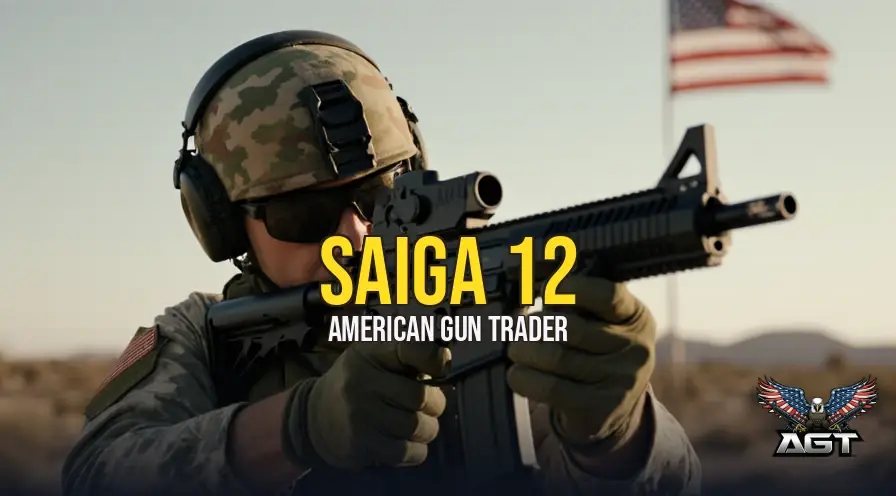
What is the Saiga 12 Shotgun?
The Saiga 12 is a semi-automatic, 12-gauge shotgun designed and manufactured in Russia by Izhmash (now Kalashnikov Concern). Based directly on the AK-47 action, it's renowned for its reliability. Its value and collectibility in the U.S. skyrocketed after a 2014 import ban ceased its supply.
The Kalashnikov Heritage: From Izhevsk to America
The Saiga 12's story begins at the Izhevsk Machine-Building Plant, the same legendary factory that has produced Kalashnikov rifles for decades. It's not merely 'AK-styled'; it is a genuine Kalashnikov firearm, sharing the same robust long-stroke gas piston system that made the AK-47 famous for its unwavering reliability in the harshest conditions. This system uses a piston attached to the bolt carrier, which is pushed rearward by gas tapped from the barrel, cycling the action with powerful authority. This design heritage is the core of the Saiga 12's appeal.
To comply with U.S. firearm importation laws of the time, specifically Section 922(r), the Saiga 12 was shipped in a 'sporterized' configuration. This meant it lacked features commonly associated with so-called 'assault weapons'. The pistol grip was removed, and the trigger group was moved rearward into a traditional rifle stock. This altered silhouette was a legal necessity, but it masked the shotgun's true potential and AK ergonomics. For many American owners, this import configuration was simply a starting point.
Despite its sporterized appearance, the heart of the machine remained a true Kalashnikov. The receiver, bolt, and operating mechanism were all Izhmash-made, giving it a level of durability that many other semi-auto shotguns struggled to match. This foundation of Russian military-grade engineering made it a prime candidate for modification by enthusiasts who wanted to restore its original design intent. You can find many other in-depth firearm reviews on our American Gun Trader blog.
The 2014 Import Ban and Its Market Shockwave
In 2014, the landscape for Russian firearms in the United States changed permanently. An Executive Order targeting Russian defense entities specifically named Kalashnikov Concern, effectively halting the importation of all their firearms, including the Saiga 12. Overnight, the supply of new Saiga shotguns was cut off. The existing pool of firearms already in the country became a finite resource.
This immediately triggered basic principles of supply and demand. With no new shotguns entering the market, prices for both new-in-box and used Saiga 12s began to climb. What was once a relatively affordable and accessible semi-auto shotgun transformed into a collector's item. This scarcity drove a surge in interest, as owners and prospective buyers realized they were holding or seeking a piece of firearms history that could no longer be easily obtained. Understanding its true gun value became crucial for both buyers and sellers in this new market.
The ban cemented the Saiga 12's legacy. It's no longer just a functional shotgun but a symbol of a specific era of firearms importation. The 'pre-ban' status gives it a cachet that similar, currently imported shotguns lack. This has led to a bifurcated market: pristine, unconverted Saiga 12s are sought by collectors, while professionally converted models are prized by shooters for their performance and ergonomics.
| Specification | Factory 'Sporter' Configuration | Typical 'AK' Conversion |
|---|---|---|
| Caliber | 12 Gauge (2 3/4" & 3" shells) | 12 Gauge (2 3/4" & 3" shells) |
| Action | Gas-operated, rotating bolt (AK action) | Gas-operated, rotating bolt (AK action) |
| Capacity | Typically 5-round detachable box magazine | Accepts 5, 8, 10, 12-rd box & 20-rd drum mags |
| Barrel Length | 19 inches (common) | 19 inches (often threaded for chokes/devices) |
| Overall Length | Approx. 41 inches | Approx. 38 inches (with fixed stock) |
| Weight (unloaded) | Approx. 7.9 lbs | Approx. 8.2 lbs (varies with components) |
| Stock | One-piece traditional rifle stock | Separate pistol grip & AK-pattern buttstock |
| Trigger Location | Rearward, integrated with sporter stock | Forward, in standard AK position |
| Sights | Notched rear sight, front bead/post | Often upgraded to AK-style iron sights or optics |
The Art of the Saiga 12 Conversion
The term 'Saiga 12 conversion' refers to the process of modifying the shotgun from its sporterized import configuration back to a traditional AK layout. This is not merely a cosmetic change; it fundamentally alters the firearm's ergonomics and handling, making it faster and more intuitive for many shooters. A proper conversion is a technical process that requires skill and an understanding of the AK platform.
The most critical step is relocating the trigger group. In the sporterized version, the trigger and hammer are located far to the rear. A conversion involves removing these parts, cutting or drilling the receiver for the new pistol grip nut and trigger holes in the correct forward position, and installing a new fire control group. This restores the classic AK pistol grip and places the trigger in its proper, ergonomic location just behind the magazine well.
Other key steps include replacing the sporter stock with an AK-pattern buttstock (fixed, folding, or collapsible) and swapping the long, one-piece forend for a standard AK handguard and gas tube assembly. Many owners also opt to have the barrel threaded to accept a variety of chokes and muzzle devices, from breachers to compensators. This process requires careful attention to Section 922(r) compliance, which mandates that a certain number of US-made parts (like the stock, pistol grip, handguard, and fire control group) be used to keep the firearm legal. Navigating these kinds of complex firearm regulations is a key part of responsible ownership and modification.
When looking to purchase a Saiga 12, it is vital to distinguish between an unconverted 'sporter' and a fully converted model. The quality of the conversion work also heavily influences the price and reliability. A professional conversion by a reputable AK gunsmith will feature clean rivet work, proper placement of the trigger guard, and a durable finish.
Performance, Reliability, and Feeding the Beast
At its core, the Saiga 12 is designed to be brutally reliable. The AK action is over-gassed by design, ensuring it can cycle under adverse conditions. However, this can be a double-edged sword with the wide variety of 12-gauge ammunition. To manage this, most Saiga 12s feature a manually adjustable gas system. This allows the user to tune the amount of gas being used to cycle the action, accommodating everything from light birdshot to heavy 3-inch magnum slugs. Typically, a 'break-in' period with several hundred rounds of high-brass, full-power buckshot or slugs is recommended to smooth out the action.
Once broken in and properly tuned, the Saiga 12 will reliably cycle a wide range of loads. The detachable box magazine is a significant feature, allowing for much faster reloads than a traditional tube-fed shotgun. Factory magazines from Izhmash are considered the most reliable, but numerous aftermarket options exist, including high-capacity 10- and 12-round box magazines and even 20-round drums. The quality of these aftermarket magazines can vary, so it's wise to test them thoroughly. When you're ready to find your next firearm, you can browse available shotguns and accessories to see what's on the market.
The platform's accuracy is what you'd expect from a shotgun. With slugs, it is more than capable of engaging targets at 100 yards, especially if equipped with an optic mounted on a side rail. With buckshot, it serves as a formidable defensive tool. The Saiga 12's combination of AK reliability, 12-gauge power, and rapid-reload capability gives it a unique place among tactical shotguns, a significant departure from other modern semi-automatic platforms that often prioritize different design features.
Identifying Variants and Buyer Considerations
When evaluating a Saiga 12 for purchase, several key features can help identify its specific model and history. The most common barrel length found in the U.S. is 19 inches, though other lengths exist. Some models came from the factory with threaded barrels, a desirable feature for those wanting to add muzzle devices. Another subtle but important detail is the receiver: some have a 'dimpled' receiver (small indentations above the magazine well), which is a characteristic of military AKs, while others are 'flat-sided.' Neither affects function, but some purists prefer the dimpled look.
The single most important consideration is the conversion status. Is it unconverted, partially converted, or fully and professionally converted? A poorly done home conversion can actually detract from the value and potentially cause reliability issues. Look for clean welds or rivets, proper alignment of the trigger guard, and a quality finish. Ask the seller who performed the work. Learning the process of how to buy a gun safely and legally is the first step for any prospective owner.
Finally, check for included accessories. Does it come with original Russian magazines, or only aftermarket ones? Is the original sporter stock included? These items can add to the overall value of the package. Because of the import ban, original parts and magazines are becoming just as collectible as the shotguns themselves.

Comments
No comments yet. Be the first to share your thoughts!
Login to CommentJoin the discussion and connect with other members