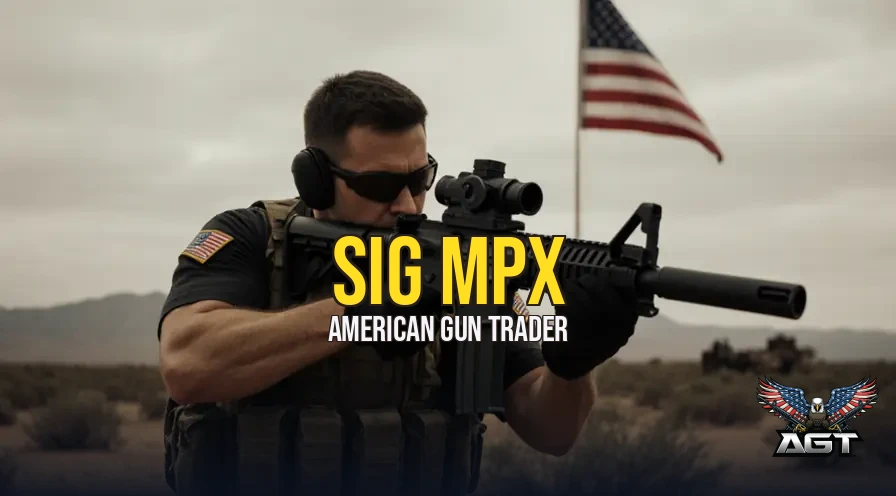
The SIG Sauer MPX platform represents a significant evolution in the realm of personal defense weapons and pistol-caliber carbines. Designed from the ground up to offer superior modularity, ergonomics, and performance, the MPX has garnered considerable attention from civilian shooters, law enforcement, and military personnel alike. This article will explore the engineering principles behind the MPX, its various iterations, and its standing within the current firearms market.
SIG Sauer MPX: A Versatile Pistol-Caliber Carbine for Modern Applications
The SIG Sauer MPX is a highly adaptable pistol-caliber carbine (PCC) platform chambered primarily in 9mm Luger, engineered for exceptional control and accuracy in a compact package, making it suitable for defensive use and competitive shooting.
The Genesis of the SIG Sauer MPX
SIG Sauer’s foray into the modern PCC market with the MPX was a strategic move to address a growing demand for firearms that bridge the gap between traditional handguns and full-sized rifles. The design prioritizes reliability, shootability, and adaptability. Key engineering decisions focused on mitigating recoil, enhancing modularity, and ensuring consistent performance across different firing conditions. The platform’s internal operating system, often compared to AR-15-style firearms due to its familiar manual of arms, was specifically refined for the unique challenges of a pistol-caliber carbine, particularly in managing the blowback inherent in such systems.
Core Design Principles and Innovations
At the heart of the MPX’s success are several key design elements. Unlike many PCCs that utilize a simple blowback operating system, the MPX employs a short-stroke, rotating-bolt gas piston system. This design choice is instrumental in reducing felt recoil and muzzle rise, contributing to faster follow-up shots and improved control. This gas-operated system is more complex than traditional blowback but offers tangible benefits in terms of shootability, especially in a carbine platform.
Modularity is another cornerstone of the MPX. The platform features an interchangeable barrel system, allowing users to adapt the firearm to different mission profiles or preferences. SIG Sauer also incorporated a robust M-LOK handguard system, providing ample real estate for mounting accessories such as lights, lasers, grips, and optics. The ambidextrous controls, including the charging handle, safety selector, and magazine release, further enhance its user-friendliness for both right- and left-handed shooters.
Evolution of the MPX Platform: Key Variants
Over its production history, SIG Sauer has introduced several variants of the MPX, each tailored to specific user needs and market segments. These variations often involve differences in barrel length, stock configurations, handguard designs, and calibers.
SIG MPX K (Carbine)
The MPX K represents a more compact iteration, often featuring shorter barrels and a reduced overall length, making it exceptionally maneuverable in confined spaces. This variant is particularly appealing for personal defense and as a compact carbine option. Its shorter profile does not compromise the core operating system, maintaining the gas piston reliability.
SIG MPX Copperhead
The MPX Copperhead is a sub-compact variant, often distinguished by its unique telescoping brace and ultra-short barrel. It is designed for extreme portability and concealability, blurring the lines between a pistol and a carbine. The Copperhead emphasizes discretion while offering the familiar controls and operating system of the MPX.
SIG MPX PCC (Competition Model)
For the competitive shooting circuit, SIG Sauer developed the MPX PCC. This model typically features a longer barrel for increased velocity and accuracy, a dedicated competition-ready trigger, and often comes configured with features that enhance its performance in speed and precision shooting disciplines. The PCC variant is built to meet the demands of competitive PCC divisions.
SIG MPX Patrol/PFS (Pistol-Caliber Firearm)
These designations often refer to configurations optimized for patrol duty or general civilian use, typically featuring standard barrel lengths and more traditional carbine stocks or braces. The Patrol and PFS models aim to provide a balance of performance, ergonomics, and compliance with various firearm regulations.
Technical Specifications and Comparative Analysis
Understanding the technical specifications of the SIG Sauer MPX variants is crucial for potential buyers and enthusiasts. The following table provides a comparative overview of some key features across different MPX models.
| Feature | SIG MPX K | SIG MPX Copperhead | SIG MPX PCC | SIG MPX Patrol |
|---|---|---|---|---|
| Caliber | 9mm Luger | 9mm Luger | 9mm Luger | 9mm Luger |
| Barrel Length | 4.5 inches | 3.5 inches | 16 inches | 8 inches |
| Overall Length (Collapsed/Extended) | ~24 inches / ~27 inches | ~14 inches / ~18 inches | ~35 inches / ~38 inches | ~26 inches / ~30 inches |
| Weight (Unloaded) | ~5.1 lbs | ~4.5 lbs | ~7.1 lbs | ~6.0 lbs |
| Operating System | Gas Piston (Short Stroke, Rotating Bolt) | Gas Piston (Short Stroke, Rotating Bolt) | Gas Piston (Short Stroke, Rotating Bolt) | Gas Piston (Short Stroke, Rotating Bolt) |
| Magazine Capacity | Typically 20 or 30 rounds | Typically 15 or 20 rounds | Typically 30 rounds | Typically 20 or 30 rounds |
| Handguard | M-LOK | M-LOK | M-LOK | M-LOK |
| Stock/Brace | Telescoping Brace/Stock | Telescoping Brace | Adjustable Stock | Adjustable Stock/Brace |
Market Performance and Availability
In our marketplace data, the SIG Sauer MPX platform consistently demonstrates strong interest from buyers seeking a premium pistol-caliber carbine. Its reputation for reliability, coupled with SIG Sauer's established brand presence, contributes to its desirability. Availability can fluctuate based on model and configuration, with certain variants, particularly those optimized for competition or concealed carry, experiencing higher demand. Based on current inventory trends, the MPX series remains a popular choice for those looking for a versatile, modern firearm that excels in various roles.
The civilian market’s embrace of the MPX is driven by its performance characteristics. Its manageable recoil makes it accessible to a wider range of shooters, including those who might find traditional rifle calibers challenging. For defensive applications, its compact size (especially the K and Copperhead variants) and lower recoil offer an advantage over larger firearms in close-quarters scenarios. In competitive shooting, the MPX platform has proven its mettle, with many shooters finding success in PCC divisions.
Accessorization and Customization
The inherent modularity of the SIG Sauer MPX platform facilitates extensive customization. Users can readily swap barrels, handguards, stocks, and braces to tailor the firearm to their specific needs. The M-LOK handguard system is a versatile foundation for attaching a wide array of accessories, including red dot sights, magnifiers, tactical lights, and foregrips. The aftermarket support for the MPX continues to grow, offering specialized triggers, enhanced charging handles, and other components designed to optimize performance and ergonomics.
Conclusion
The SIG Sauer MPX has firmly established itself as a leading contender in the pistol-caliber carbine market. Its innovative gas piston operating system, combined with a commitment to modularity and user-centric design, has created a firearm that is both highly functional and adaptable. Whether for home defense, competitive shooting, or general recreational use, the MPX platform offers a compelling blend of performance, reliability, and versatility. As SIG Sauer continues to refine and expand the MPX line, its position as a premier choice for discerning firearm owners is likely to remain strong.

Comments
No comments yet. Be the first to share your thoughts!
Login to CommentJoin the discussion and connect with other members