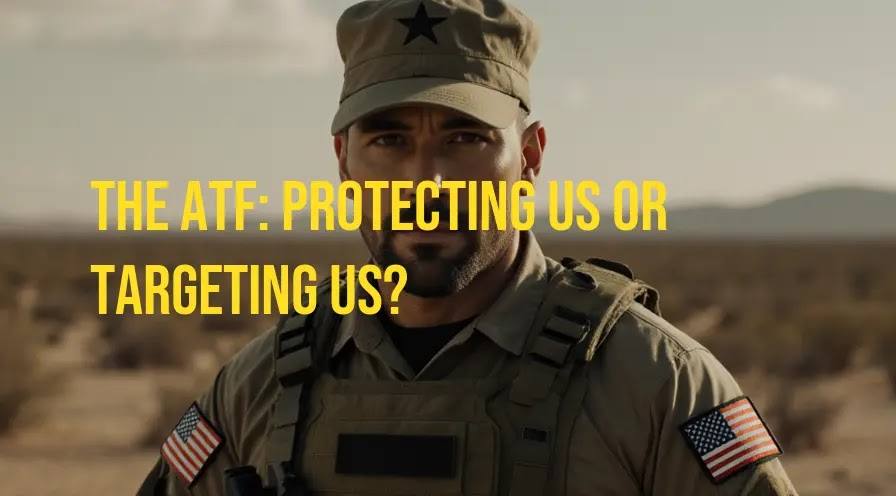
The Bureau of Alcohol, Tobacco, Firearms, and Explosives (ATF) is a name that evokes strong reactions from gun owners across the United States. While its mission is to protect communities from violent criminals and the illegal use of firearms, many believe the agency has overstepped its authority, infringing on Second Amendment rights and targeting lawful citizens. The call to abolish the ATF is not a fringe idea; it's a growing sentiment fueled by a long history of controversial actions and perceived failures. This debate isn't just about a three-letter agency; it's about the fundamental relationship between the government and the people it serves, especially when it comes to the right to bear arms. As we delve into the arguments, we'll explore the events that have shaped public opinion and ask the critical question: has the ATF become an enemy to the very people it's meant to protect?
The Case Against the ATF: A Legacy of Controversy
Criticism of the ATF isn't new. For decades, the agency has been at the center of high-profile incidents that have drawn condemnation from gun rights advocates and civil liberties organizations alike. These events are often cited as prime examples of government overreach and incompetence, forming the bedrock of the argument to dismantle the agency entirely. To understand the call to abolish the ATF, it's important to examine its history and controversial actions.

The Siege at Waco
Perhaps no single event is more synonymous with ATF controversy than the 1993 siege of the Branch Davidian compound in Waco, Texas. The initial raid, intended to execute a search warrant for illegal firearms, resulted in a deadly firefight that left four ATF agents and six Branch Davidians dead. The ensuing 51-day standoff, which ended in a fiery tragedy, is seen by many as a catastrophic failure of leadership and tactics. The source article highlights this, noting, "They did it on February 28, 1993, at a small religious compound outside of Waco, Texas." Critics argue that the agency's aggressive approach created a volatile situation that could have been avoided, ultimately leading to the loss of dozens of lives, including many women and children. For many lawful gun owners, Waco became a symbol of a federal agency willing to use overwhelming force against its own citizens.
Operation Fast and Furious
Another significant mark on the ATF's record is Operation Fast and Furious. This botched sting operation, which ran from 2009 to 2011, allowed firearms to be sold to straw purchasers with the hope of tracking them to Mexican drug cartel leaders. Instead, the agency lost track of hundreds of guns, many of which were later found at crime scenes on both sides of the border. One of these guns was used in the murder of U.S. Border Patrol Agent Brian Terry. As the source article points out, the ATF "literally armed the cartels, then used the fact that these guns came from the United States to help try and justify gun control." This scandal reached the highest levels of government and led to accusations that the ATF was negligent and mismanaged the operation.
How ATF Policies Affect Lawful Gun Owners and Gun Stores
Beyond major scandals, the day-to-day enforcement of federal gun control laws by the ATF has created an adversarial relationship with many law-abiding citizens and businesses. Gun store owners, in particular, often feel they are treated as suspects rather than partners in ensuring legal firearm sales. The implementation of "zero-tolerance" policies for Federal Firearms Licensees (FFLs) has led to fears that minor clerical errors could result in the loss of their livelihood. This stringent approach, critics say, does little to stop crime and instead places an undue burden on small business owners who are trying to navigate a complex web of regulations. If you're looking to buy a firearm legally, understanding these regulations is crucial for a smooth process.
"Good, decent people have been threatened, harassed, imprisoned, and outright killed because of the ATF and their overzealous attempt to treat lawful gun owners as criminals."
– Tom Knighton
This sentiment captures the deep-seated frustration many feel. The ATF's actions, from reclassifying common firearm accessories to conducting aggressive raids, have created a climate of fear and mistrust. Many gun owners believe the agency's focus has shifted from targeting violent criminals to criminalizing the possession of certain types of firearms and accessories popular with law-abiding citizens. This perception has further fueled calls for reform or outright abolition of the agency.
What Would Happen if the ATF Was Abolished?
The idea of disbanding a federal agency raises significant questions. What would take its place? Who would enforce existing federal gun laws? These are not simple issues, and any legislative effort to abolish the ATF would need to provide clear answers. The source article acknowledges this, stating, "Unless the bill eliminating the agency also eliminates all federal gun control laws... someone will have to take on enforcement of those laws."
Potential Scenarios for Enforcement
Several possibilities exist for handling the ATF's responsibilities post-abolition. Some have suggested merging its duties with other federal agencies. Here are a few potential outcomes:
- Merging with the FBI: The FBI already handles violent crime and background checks, making it a logical candidate to absorb the ATF's criminal enforcement duties.
- Merging with the DEA: As the source article mentions, merging with the Drug Enforcement Administration has also been discussed, though the mission overlap is less clear.
- State-Level Enforcement: Some argue that enforcement of gun laws should be returned to the states, allowing for policies that better reflect local values and concerns.
- Eliminating Federal Gun Control: The most ambitious proposal would involve repealing the federal laws the ATF enforces, such as the National Firearms Act (NFA) of 1934 and the Gun Control Act of 1968.
Regardless of the path chosen, proponents of abolishing the ATF stress the need for careful planning to ensure a smooth transition that respects the rights of gun owners. Many believe it's time to stop the endless cycle of questionable enforcement and get back to basics. Navigating the process of a private sale can be complex, and understanding the legalities is paramount for anyone looking into how to sell a gun safely and legally.
It seems the current system has a real list of problems; some might even say it's an *armslist* of issues that needs addressing. Any new framework must learn from the past to avoid repeating the same mistakes that have plagued the ATF for so long.
Conclusion: A Crossroads for Gun Rights in America
The debate to abolish the ATF is more than a political slogan; it is a serious conversation about the role of federal law enforcement and its impact on the constitutional rights of American citizens. The agency's history, marked by tragic events like Waco and scandalous operations like Fast and Furious, has irrevocably damaged its reputation in the eyes of many gun owners. For them, the ATF represents a clear and present danger to their Second Amendment freedoms, an agency that has consistently demonstrated poor judgment and a bias against lawful gun ownership.
While the practicalities of dismantling a federal agency are complex, the call to do so is a testament to the deep-seated belief that the current system is broken beyond repair. Whether the solution is to merge the ATF's duties with another agency or to fundamentally rethink federal gun control, the AmericanGunTrader.com community must make their voice heard on this and other critical issues facing gun owners today.


Comments
This article has 8 comments. Login to share your thoughts!
Login to CommentJoin the discussion and connect with other members