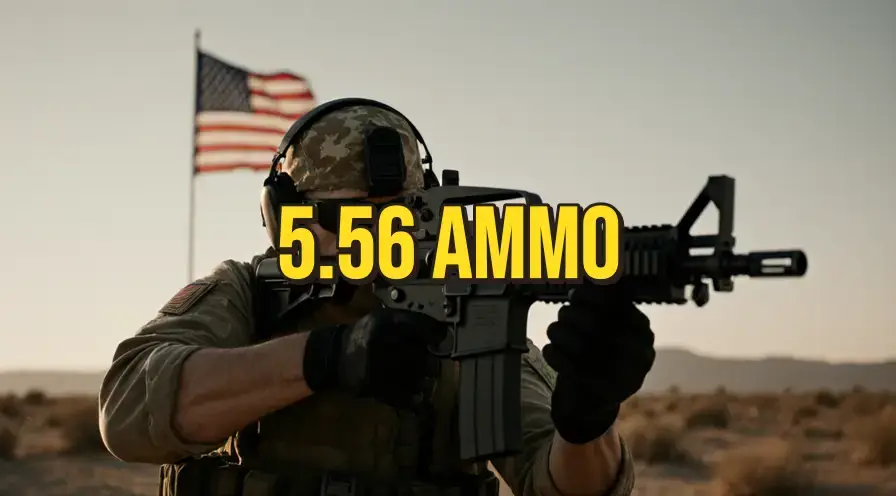
The 5.56x45mm NATO cartridge stands as a cornerstone of modern small arms, widely adopted by military forces and civilian shooters alike due to its balance of manageable recoil, accuracy, and effectiveness. For firearm enthusiasts and responsible gun owners, a thorough understanding of 5.56 ammunition is paramount for safe, effective, and informed firearm ownership.
What are the key differences between 5.56x45mm NATO and .223 Remington ammunition?
While often used interchangeably in casual conversation, 5.56x45mm NATO and .223 Remington are distinct cartridges with critical differences impacting firearm compatibility and performance. The primary distinction lies in their pressure ratings and chamber specifications. 5.56 NATO is loaded to a higher pressure (SAAMI maximum average pressure of 62,300 psi) than .223 Remington (SAAMI MAP of 55,000 psi). This means 5.56 NATO ammunition generates more chamber pressure. Consequently, firearms chambered in 5.56 NATO can safely fire both .223 Remington and 5.56 NATO ammunition. However, firing 5.56 NATO ammunition in a firearm exclusively chambered for .223 Remington can lead to dangerous over-pressurization, potentially causing firearm damage or injury. Conversely, .223 Remington ammunition can be safely fired in a 5.56 NATO chamber, though it may exhibit slightly lower velocity and accuracy due to the longer throat typically found in 5.56 NATO chambers.
Chamber Dimensions and Pressure
The physical dimensions of the chamber also play a role. 5.56 NATO chambers are generally designed with a longer freebore (the lede or throat) to accommodate the higher pressures and the longer ogive of some military-spec bullets. This longer throat allows the bullet to travel further before engaging the rifling, which can contribute to increased velocity and reduced pressure spikes when firing NATO rounds. .223 Remington chambers are typically shorter, designed for the specific ogive of .223-loaded bullets. Using 5.56 NATO in a strict .223 Remington chamber can result in the bullet seating into the rifling prematurely, leading to excessive pressure and potential malfunctions.
Military vs. Civilian Use
The 5.56x45mm NATO designation is primarily associated with military use, developed from the earlier .223 Remington cartridge to offer improved terminal ballistics and performance under various combat conditions. Civilian ammunition marketed as ".223 Remington" is typically loaded to SAAMI specifications, which are generally lower than NATO standards. This distinction is crucial for shooters to understand when selecting ammunition for their AR-15 platform rifles and other firearms chambered for this versatile caliber.
Understanding Bullet Construction and Types
The effectiveness of 5.56 ammo is heavily influenced by its bullet construction. Different bullet types are engineered for specific purposes, ranging from varmint hunting to military engagement. Understanding these variations is key to selecting the right ammunition for your needs and ensuring responsible use.
Full Metal Jacket (FMJ)
Full Metal Jacket (FMJ) projectiles are the most common type of 5.56 ammunition found on the market. These bullets feature a soft lead core encased in a harder metal jacket, typically copper or a copper alloy. FMJ bullets are designed for target shooting, training, and general plinking. They offer good accuracy and reliability, and their construction prevents significant expansion upon impact, making them less prone to over-penetration in certain scenarios. In our marketplace data, FMJ rounds often represent the most cost-effective option for high-volume shooting.
Soft Point (SP) and Hollow Point (HP)
Soft Point (SP) and Hollow Point (HP) bullets are designed for controlled expansion upon impact. SP bullets have an exposed lead tip, which deforms and flattens upon striking a target, increasing the wound channel. HP bullets feature a cavity at the tip, designed to initiate rapid expansion and fragmentation. These types of 5.56 ammo are commonly used for hunting small to medium game and for self-defense applications where controlled energy transfer and reduced over-penetration are desirable. Based on current inventory trends, availability of specialized HP and SP loads can fluctuate based on seasonal demand for hunting applications.
Ballistic Tip (BT) and Polymer Tip
Ballistic Tip (BT) and polymer tip projectiles combine the aerodynamic advantages of a pointed nose with the controlled expansion characteristics of lead or other core materials. The polymer tip at the front of the bullet aids in ballistic coefficient (BC) by reducing air resistance, leading to flatter trajectories and increased accuracy at longer ranges. Upon impact, the polymer tip is driven into the bullet core, initiating rapid and predictable expansion. These rounds are favored by hunters seeking precise, humane kills on a variety of game. Their advanced design often places them in a higher price bracket compared to standard FMJ rounds.
Armor-Piercing (AP) and Incendiary Rounds
Armor-Piercing (AP) and Incendiary rounds are specialized military-grade ammunition and are generally not available to civilian consumers due to legal restrictions. AP rounds typically feature a hardened steel or tungsten core designed to penetrate armored targets. Incendiary rounds contain a pyrotechnic charge that ignites upon impact, intended for signaling or anti-materiel purposes. Possession and use of such ammunition by civilians are strictly regulated or prohibited in most jurisdictions.
Technical Specifications and Performance Metrics
When evaluating 5.56 ammunition, several technical specifications and performance metrics are critical for understanding its capabilities and suitability for different applications. These include muzzle velocity, energy, ballistic coefficient, and grain weight.
Muzzle Velocity and Energy
Muzzle velocity, typically measured in feet per second (fps), refers to the speed of the bullet as it leaves the firearm's muzzle. Higher muzzle velocity generally translates to a flatter trajectory and less bullet drop at longer distances. Muzzle energy, measured in foot-pounds (ft-lbs), quantifies the kinetic energy of the bullet at the muzzle, indicating its potential impact force. For 5.56 ammo, common muzzle velocities range from approximately 2,800 fps to over 3,200 fps, depending on the bullet weight and powder charge. Corresponding muzzle energies can range from around 1,200 ft-lbs for lighter bullets to over 1,500 ft-lbs for heavier loads.
Bullet Grain Weight
Bullet grain weight is a measure of the bullet's mass, with one pound equaling 7,000 grains. Common grain weights for 5.56x45mm NATO and .223 Remington ammunition include 55, 62, 69, and 77 grains. Lighter bullets (e.g., 55-grain) tend to have higher muzzle velocities but can be more susceptible to wind drift and may offer less penetration. Heavier bullets (e.g., 77-grain) generally have lower muzzle velocities but provide better ballistic coefficients, improved penetration, and more consistent terminal performance at extended ranges. In our marketplace data, 55-grain FMJ rounds are consistently the most popular for general use due to their balance of cost and performance.
Ballistic Coefficient (BC)
The ballistic coefficient (BC) is a measure of a bullet's ability to retain its velocity and overcome air resistance in flight. A higher BC indicates a more aerodynamically efficient bullet, which translates to a flatter trajectory, less wind drift, and greater energy retention at longer distances. Bullets with boat-tail designs and pointed tips (like polymer tips) generally have higher BC values than flat-base bullets. For 5.56 ammunition, BC values can range from approximately 0.250 for basic FMJ bullets to over 0.400 for high-performance match or hunting rounds.
Twist Rate Compatibility
Firearm barrel twist rates are crucial for stabilizing projectiles in flight. The twist rate, often expressed as 1 turn in X inches (e.g., 1:7, 1:9), indicates how many inches the rifling takes to complete one full rotation. Faster twist rates (smaller numbers) are necessary to stabilize longer, heavier bullets, which typically have higher BCs. For instance, a 1:7 twist rate is ideal for stabilizing 69-grain and 77-grain bullets commonly used in match or tactical applications. A slower twist rate, such as 1:12 or 1:14, is sufficient for lighter 55-grain bullets. Mismatched twist rates and bullet weights can lead to poor accuracy and tumbling projectiles.
| Bullet Weight (Grains) | Typical Muzzle Velocity (fps) | Typical Muzzle Energy (ft-lbs) | Common Bullet Type | Barrel Twist Rate Suitability |
|---|---|---|---|---|
| 55 | 3,000 - 3,200 | 1,200 - 1,300 | FMJ, SP | 1:9 or faster |
| 62 | 2,900 - 3,100 | 1,200 - 1,350 | FMJ (often steel core for military), SP | 1:7 or faster |
| 69 | 2,800 - 3,000 | 1,200 - 1,300 | Match HPBT | 1:7 or faster |
| 77 | 2,600 - 2,800 | 1,150 - 1,250 | Match HPBT, OTM | 1:7 or faster |
Choosing the Right 5.56 Ammunition for Your Needs
Selecting the appropriate 5.56 ammunition involves considering your firearm's chambering, intended use, and personal preferences. Responsible ammunition selection ensures safety, optimal performance, and adherence to legal requirements.
Firearm Compatibility: 5.56 NATO vs. .223 Remington
As previously detailed, the most critical factor is ensuring your firearm is chambered for either 5.56 NATO or .223 Remington. If your rifle is marked only for .223 Remington, it is safest to use only .223 Remington ammunition. If your rifle is marked as 5.56 NATO (or .223/5.56), you can safely fire both .223 Remington and 5.56 NATO ammunition. Always consult your firearm's manual and markings to confirm chambering. Based on current inventory trends, many modern AR-15 style rifles are dual-chambered to accept both, offering greater flexibility.
Purpose-Driven Selection
For general target practice, plinking, and training, 55-grain or 62-grain FMJ ammunition offers a cost-effective and reliable option. These rounds provide good accuracy for recreational shooting and are widely available. For hunting applications, especially for varmints or small game, expanding projectiles like 55-grain SP or ballistic tip rounds are often preferred for humane and effective results. For precision shooting, competition, or longer-range engagements, heavier bullets such as 69-grain or 77-grain match-grade ammunition with high ballistic coefficients are recommended, provided your rifle's twist rate can stabilize them.
Budget and Availability
The cost of 5.56 ammunition varies significantly based on bullet type, manufacturer, and quantity purchased. Bulk purchases, often in boxes of 200, 500, or 1000 rounds, generally offer a lower price per round. FMJ ammunition is typically the most affordable, while specialized hunting and match-grade rounds command a higher price due to their advanced construction and tighter manufacturing tolerances. Based on current inventory trends, demand for 5.56 ammunition remains consistently high, so purchasing from reputable dealers with stable stock is advisable.
Responsible Storage and Handling
Proper storage of 5.56 ammunition is essential for safety and longevity. Ammunition should be stored in a cool, dry environment, away from direct sunlight and extreme temperatures. Keep ammunition in its original packaging or in designated ammunition storage containers. Ensure that ammunition is stored securely and inaccessible to unauthorized individuals, particularly children. Always handle ammunition with care, avoiding dropping or exposing it to moisture, which can degrade propellant and primers.
The Future of 5.56 Ammunition
The 5.56x45mm NATO cartridge continues to evolve, with manufacturers constantly researching and developing new projectile designs and propellant technologies. Innovations focus on improving terminal ballistics, increasing accuracy, and enhancing performance in various environmental conditions. While established bullet types remain popular, ongoing research aims to refine designs for greater efficiency and effectiveness. The enduring popularity of the AR-15 platform ensures that 5.56 ammunition will remain a dominant force in the small arms market for the foreseeable future, with continuous advancements in its performance characteristics.

Comments
No comments yet. Be the first to share your thoughts!
Login to CommentJoin the discussion and connect with other members