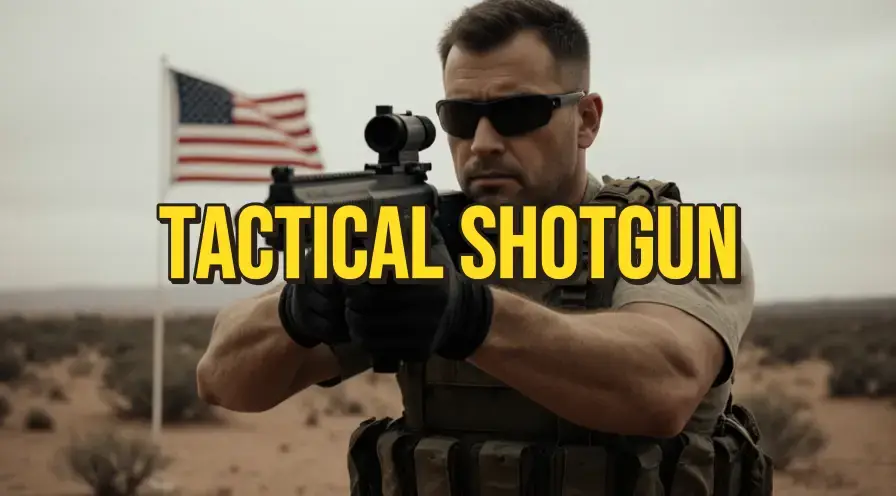
The tactical shotgun represents a highly specialized class of firearm, engineered for effectiveness in demanding situations. Unlike traditional hunting or sporting shotguns, tactical variants are optimized for rapid deployment, reliability under stress, and adaptability to various operational environments. Their design emphasizes intuitive operation, robust construction, and the capacity to utilize a wide array of ammunition types.
What is a tactical shotgun?
A tactical shotgun is a firearm designed for military, law enforcement, or civilian defense, characterized by features such as extended magazine capacity, pistol grips, ghost ring sights, and accessory mounting rails. These shotguns prioritize reliability, rapid cycling, and versatility in ammunition selection for close-quarters engagements.
Core Design Principles of Tactical Shotguns
The genesis of the tactical shotgun lies in its evolution from more conventional designs to meet specific operational requirements. Early military and law enforcement agencies recognized the shotgun's devastating close-range power and its potential for less-lethal applications. This recognition spurred a focus on enhancing its inherent strengths while mitigating its weaknesses, such as limited capacity and manual operation. Key design principles include:
- Reliability: Tactical shotguns are built to function flawlessly under adverse conditions, including exposure to dirt, moisture, and extreme temperatures. This often translates to simpler, more robust operating mechanisms.
- Capacity: To maximize effectiveness in high-stress scenarios, these shotguns typically feature extended magazine tubes, allowing for more rounds between reloads.
- Ergonomics and Handling: Features like pistol grips, adjustable stocks, and foregrips are incorporated to enhance shooter control and facilitate rapid target acquisition in dynamic situations.
- Modularity and Accessory Integration: The ability to mount lights, lasers, optics, and other accessories is a hallmark of modern tactical shotguns, allowing for customization to specific mission profiles.
- Ammunition Versatility: While designed for standard 12-gauge or 20-gauge shells, many tactical shotguns can reliably cycle a diverse range of loads, from buckshot and slugs to specialized breaching rounds and less-lethal options.
Operating Mechanisms: Pump-Action vs. Semi-Automatic
The primary distinction in tactical shotgun operation lies between pump-action and semi-automatic mechanisms. Each offers distinct advantages and disadvantages for different users and applications.
Pump-Action Tactical Shotguns
Pump-action shotguns remain a cornerstone of tactical applications due to their unparalleled reliability and simplicity. The user manually cycles the action by operating a sliding forend, which extracts the spent shell and loads a fresh one from the magazine. This direct manual control ensures that the firearm will cycle if the ammunition is properly chambered, making them less susceptible to malfunctions caused by underpowered loads or fouling.
- Advantages: Extreme reliability, ability to fire even with a partially jammed round (user can manually clear it), often more affordable, simpler maintenance.
- Disadvantages: Slower rate of fire, requires more physical effort from the shooter to cycle the action.
Semi-Automatic Tactical Shotguns
Semi-automatic tactical shotguns utilize the energy from the fired round to automatically cycle the action, ejecting the spent shell and chambering a new one. This significantly increases the rate of fire and reduces shooter fatigue during sustained engagements. There are several gas- and inertia-driven systems employed in semi-automatic shotguns, each with its own performance characteristics.
- Advantages: Higher rate of fire, reduced recoil for faster follow-up shots, less shooter fatigue.
- Disadvantages: Can be more sensitive to ammunition type (some may not cycle lighter loads), generally more complex and potentially more prone to malfunctions if not maintained, often more expensive.
Key Features Defining a Tactical Shotgun
Beyond the operating mechanism, several specific features distinguish a tactical shotgun from its civilian counterparts:
- Extended Magazine Capacity: Standard shotguns often hold 4-5 rounds. Tactical models commonly feature magazine tubes that extend forward of the barrel, accommodating 6, 7, 8, or even more rounds.
- Sights: While some tactical shotguns retain traditional bead sights, many are equipped with more robust ghost ring sights or Picatinny rails for the easy mounting of red dot sights or other optical aiming devices.
- Stocks and Grips: Fixed stocks are often replaced with adjustable or collapsible stocks to allow for length-of-pull adjustment based on the shooter's physique or the wearing of body armor. Pistol grips provide enhanced control, particularly for pump-action models.
- Accessory Rails: Picatinny or M-LOK rails are frequently integrated into the forend and receiver, enabling the attachment of tactical lights, lasers, vertical foregrips, and bipods.
- Barrel Length and Chokes: Tactical shotguns typically feature shorter barrels (e.g., 18-20 inches) for maneuverability in confined spaces. While fixed chokes are common, some models offer interchangeable chokes for varying shot patterns.
- Material and Finish: Robust materials like synthetic stocks and durable coatings (e.g., Cerakote, Parkerizing) are employed to withstand harsh environments and heavy use.
Popular Tactical Shotgun Models and Their Specifications
In our marketplace data, several models consistently emerge as top choices for tactical applications. These platforms are recognized for their proven reliability, modularity, and performance under pressure. Below is a comparison of key specifications for some of the most sought-after tactical shotguns.
| Model | Action Type | Caliber | Magazine Capacity (Standard) | Barrel Length (Approx.) | Sights | Notable Features |
|---|---|---|---|---|---|---|
| Remington 870 Tactical | Pump-Action | 12 Gauge | 6+1 rounds | 18.5 inches | Ghost Ring | Proven reliability, extensive aftermarket support, modular design. |
| Mossberg 590A1 | Pump-Action | 12 Gauge | 8+1 rounds | 20 inches | Ghost Ring | Military-proven, heavy-walled barrel, robust construction, bayonet lug. |
| Benelli M4 | Semi-Automatic (Gas-Operated) | 12 Gauge | 5+1 or 7+1 rounds | 18.5 inches | Ghost Ring with Picatinny Top Rail | Reliable ARGO gas system, ergonomic design, fast cycling. |
| Kel-Tec KSG | Pump-Action | 12 Gauge | 14+1 rounds (dual tubes) | 18.5 inches | Iron Sights | Unique dual-tube magazine system, bullpup design for compact size. |
| Fierce Firearms Reaper | Pump-Action | 12 Gauge | 7+1 rounds | 18.5 inches | Picatinny Rail | Modern design, lightweight construction, often includes accessory packages. |
Applications of Tactical Shotguns
The versatility of the tactical shotgun lends itself to a wide array of applications, ranging from professional use to personal defense.
Law Enforcement and Military Use
For law enforcement agencies, tactical shotguns serve as primary or secondary weapons for patrol officers, SWAT teams, and specialized units. Their effectiveness in breaching operations, crowd control (with appropriate less-lethal ammunition), and room clearing makes them invaluable. In military contexts, they are employed for close-quarters battle (CQB), sentry duty, and as a deterrent against threats at close range.
Home Defense
For civilian applications, the tactical shotgun is a premier choice for home defense. Its psychological impact, combined with the stopping power of buckshot or slugs, offers a formidable deterrent and defensive tool. Features like pistol grips and shorter barrels enhance maneuverability within a residential environment. Ammunition selection is critical for home defense, with options like buckshot providing a wide pattern and slugs offering more precise impact.
Sporting and Competitive Shooting
While primarily designed for tactical scenarios, some aspects of tactical shotguns appeal to competitive shooters. Disciplines such as 3-Gun competition often feature divisions where tactical-style shotguns are used. These events test a shooter's ability to rapidly engage targets with a shotgun, often requiring the use of extended magazines and optical sights, mirroring the skills needed in tactical applications.
Ammunition Considerations for Tactical Shotguns
The effectiveness of any tactical shotgun is intrinsically linked to the ammunition it employs. The ability to reliably cycle and deploy various loads is a key advantage.
- Buckshot: This is perhaps the most common defensive load. It consists of multiple pellets designed to create a wide pattern, increasing the probability of hitting a target. Common sizes include 00 buckshot (nine to twelve .33-inch pellets) and #4 buckshot (twenty-seven .24-inch pellets).
- Slugs: For longer distances or situations requiring greater penetration, slugs offer a single projectile with significant kinetic energy. Brenneke and Foster slugs are common types.
- Birdshot: While primarily for hunting small game, smaller birdshot loads can be used for less-lethal applications in very close-range scenarios, though their effectiveness and appropriateness are debated and depend heavily on the specific load and situation.
- Specialty Loads: This category includes less-lethal rounds (e.g., beanbag rounds, rubber bullets), breaching rounds designed to destroy door locks, and incendiary rounds. These are typically used by trained professionals.
It is imperative that shooters consult their shotgun's manual to ensure compatibility with different ammunition types and to understand the optimal loads for their intended application. Malfunctions can occur if a shotgun is not designed to reliably cycle lighter loads, particularly in semi-automatic variants.
Purchasing a Tactical Shotgun: Key Considerations
When considering the acquisition of a tactical shotgun, several factors warrant careful evaluation to ensure the best fit for individual needs and legal compliance.
- Intended Use: Is the shotgun for home defense, competition, or professional duty? This will influence choices regarding action type, magazine capacity, and features.
- Reliability and Proven Track Record: Based on current inventory trends and user feedback, models with a history of dependable performance are often preferred. Market data indicates that brands like Remington, Mossberg, and Benelli have consistently high reliability ratings for their tactical offerings.
- Ergonomics and Fit: The shotgun must fit the shooter comfortably. Adjustable stocks and a well-designed pistol grip can significantly improve handling and control.
- Aftermarket Support: A robust aftermarket for accessories and parts can greatly enhance the versatility and maintainability of a tactical shotgun.
- Legal Regulations: Firearms laws vary significantly by jurisdiction. It is crucial to understand federal, state, and local regulations regarding shotgun features, magazine capacity, and ownership.
Navigating the landscape of tactical shotguns requires a thorough understanding of their design, application, and the legal framework surrounding their ownership. By focusing on reliability, modularity, and appropriate ammunition, individuals can select a platform that effectively meets their needs.

Comments
No comments yet. Be the first to share your thoughts!
Login to CommentJoin the discussion and connect with other members