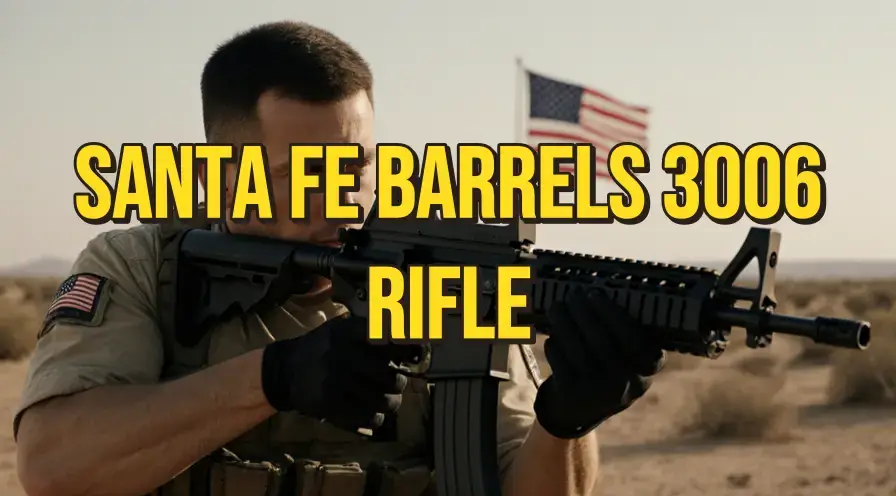
The .30-06 Springfield cartridge remains a cornerstone of American hunting and sport shooting, renowned for its versatility and proven performance across a wide range of applications. When considering a rifle chambered for this potent round, the quality of the barrel is paramount. Santa Fe Machine Works, and subsequently its successors and associated brands, have produced barrels that have equipped numerous firearms, including those chambered in .30-06. This article delves into the specifics of Santa Fe barrels for .30-06 rifles, providing critical information for collectors, shooters, and potential buyers seeking to understand their characteristics, historical context, and market value.
Understanding Santa Fe Barrels for .30-06 Rifles
Santa Fe barrels for .30-06 rifles offer a blend of historical significance and functional capability. These barrels are often found on various platforms, most notably on Springfield M1903 variants and other rifles that utilize the robust .30-06 Springfield cartridge. Acquiring a rifle with a Santa Fe barrel requires an understanding of its construction, potential wear, and its place within the firearms market. Our marketplace data indicates a consistent interest in rifles featuring these barrels, particularly those in good condition that retain original markings and specifications.
Historical Context and Manufacturing
The term 'Santa Fe' in relation to firearms barrels often points to Santa Fe Machine Works, a company that played a significant role in firearm production and refurbishment, particularly during and after World War II. While they may not have manufactured every barrel bearing their name from raw materials in the traditional sense, they were instrumental in re-barreling, modifying, and assembling firearms for various government contracts and civilian markets. Consequently, a Santa Fe barrel on a .30-06 rifle could originate from an original factory production, a post-war refurbishment, or even a custom build utilizing their components. This manufacturing history influences their collectibility and performance characteristics.
Barrel Specifications and Features
The specifications of a Santa Fe .30-06 rifle barrel can vary depending on the specific firearm platform it was intended for or adapted to. Common features include:
- Material: Typically forged steel, chosen for its durability and ability to withstand the pressures generated by the .30-06 cartridge.
- Rifling: Standard rifling twist rates for the .30-06 are designed to stabilize bullets ranging from 150 to 220 grains. The specific twist rate can influence accuracy with different bullet weights.
- Length: Barrel lengths often align with standard military or hunting rifle configurations, commonly ranging from 20 to 24 inches, impacting muzzle velocity and handling characteristics.
- Markings: Original Santa Fe barrels may bear specific manufacturer markings, arsenal stamps, or ordnance proofs, which are crucial for authentication and historical assessment.
Performance Characteristics
The performance of a Santa Fe .30-06 barrel is directly tied to its condition and the rifle platform it is mounted on. A well-maintained barrel with a clean bore and a consistent rifling twist will generally provide good accuracy. The .30-06 cartridge itself is known for its effective range, capable of accurate fire well beyond 500 yards with appropriate loads and a skilled marksman. Based on current inventory trends, rifles featuring Santa Fe barrels that have been properly cared for demonstrate reliable function and acceptable accuracy for hunting and target shooting.
Evaluating a Santa Fe .30-06 Rifle Barrel
When assessing a Santa Fe barrel on a .30-06 rifle, several factors are critical to determining its value and operational readiness. These include the physical condition of the barrel, the presence of original markings, and the overall history of the firearm.
Bore Condition and Rifling Integrity
The most critical aspect of a barrel's condition is its bore. A thorough inspection should reveal the state of the rifling. Look for:
- Muzzle Erosion: Wear at the muzzle can significantly degrade accuracy. A sharp, well-defined muzzle crown is desirable.
- Groove and Land Wear: The rifling should be distinct, with clearly defined lands and grooves. Excessive wear can lead to poor bullet stabilization.
- Pitting and Corrosion: Any signs of rust, pitting, or other corrosive damage within the bore are detrimental to both accuracy and longevity. A bore scope is an invaluable tool for this assessment.
External Condition and Markings
The external condition of the barrel, while less critical for function than the bore, contributes to the rifle's aesthetic appeal and collectibility. Key areas to inspect include:
- Finish: Original finishes like bluing or parkerizing should be examined for wear, scratches, or rust.
- Straightness: The barrel should be visually straight. Any noticeable bends can severely impact accuracy.
- Manufacturer Markings: Authentic Santa Fe markings, serial numbers, and proof marks are essential for verifying originality and historical provenance. The clarity and presence of these markings can significantly influence a rifle's value.
Technical Specifications Table: Common .30-06 Barrel Configurations
The following table outlines typical specifications for .30-06 rifle barrels, which may include those manufactured or utilized by Santa Fe. Note that exact specifications can vary based on the specific rifle model and era of production.
| Feature | Specification Range (Typical) | Notes |
|---|---|---|
| Caliber | .30-06 Springfield | Standard cartridge |
| Barrel Material | Forged Steel (e.g., 4140 Chrome-Moly) | Durability and strength |
| Barrel Length | 20" - 26" | Common lengths for various rifle types |
| Rifling Twist Rate | 1:10" to 1:12" | Optimized for 150-220 grain bullets |
| Number of Grooves | 4 or 6 | Standard rifling configurations |
| Muzzle Diameter | ~0.600" - 0.750" | Varies with barrel contour |
| Chamber Type | SAAMI Specification | Ensures compatibility with ammunition |
The Role of the Barrel in Accuracy
The barrel is arguably the most critical component influencing a rifle's accuracy. For a .30-06, the barrel's dimensions, the precision of its rifling, and its material properties all contribute to how well it stabilizes a projectile. A Santa Fe barrel, when in good condition, should be capable of delivering consistent shot placement. Factors like heat dissipation, barrel whip during firing, and the consistency of the rifling are all influenced by the barrel's design and manufacturing. Based on current inventory trends, rifles with well-preserved Santa Fe barrels often perform comparably to other quality barrels of their era.
Acquisition Considerations for Santa Fe .30-06 Rifles
When looking to acquire a rifle featuring a Santa Fe .30-06 barrel, buyers should be informed about the typical acquisition channels and what to expect in terms of market value and availability.
Marketplace Dynamics and Pricing
In our marketplace data, the value of rifles equipped with Santa Fe .30-06 barrels is largely dependent on the specific rifle model, its overall condition, historical provenance, and the presence of original components. Rifles in excellent, original condition, especially those with documented history or rare configurations, command higher prices. Common M1903 Springfield rifles that have been re-barreled or refurbished by Santa Fe are generally more accessible. Prices can range significantly, from a few hundred dollars for a well-used but functional example to upwards of a thousand dollars or more for a pristine or historically significant piece.
Where to Find Santa Fe .30-06 Rifles
Potential buyers can find rifles with Santa Fe .30-06 barrels through several avenues:
- Online Firearms Marketplaces: Websites specializing in firearm sales are a primary source. Listings often include detailed descriptions and photographs, allowing for initial assessment.
- Gun Shows: Local and national gun shows offer opportunities to physically inspect firearms before purchase, enabling a hands-on evaluation of barrel condition and overall rifle integrity.
- Specialty Dealers: Dealers focusing on historical firearms, military surplus, or specific rifle platforms may have a curated selection of rifles that could include those with Santa Fe barrels.
Restoration and Maintenance
For those acquiring a rifle with a Santa Fe .30-06 barrel that requires attention, restoration and maintenance are key. This can range from simple cleaning and lubrication to more involved processes like re-bluing or professional assessment of the bore. It is advisable to consult with experienced gunsmiths familiar with vintage firearms to ensure any work performed preserves the rifle's historical integrity and value.
Conclusion
Santa Fe barrels for .30-06 rifles represent a segment of American firearms history that continues to be of interest to enthusiasts. Understanding their manufacturing background, performance characteristics, and the critical factors for evaluation is essential for any potential acquirer. By focusing on bore condition, original markings, and the overall integrity of the rifle, buyers can make informed decisions and potentially acquire a piece of firearm heritage that offers both historical significance and reliable performance.

Comments
No comments yet. Be the first to share your thoughts!
Login to CommentJoin the discussion and connect with other members