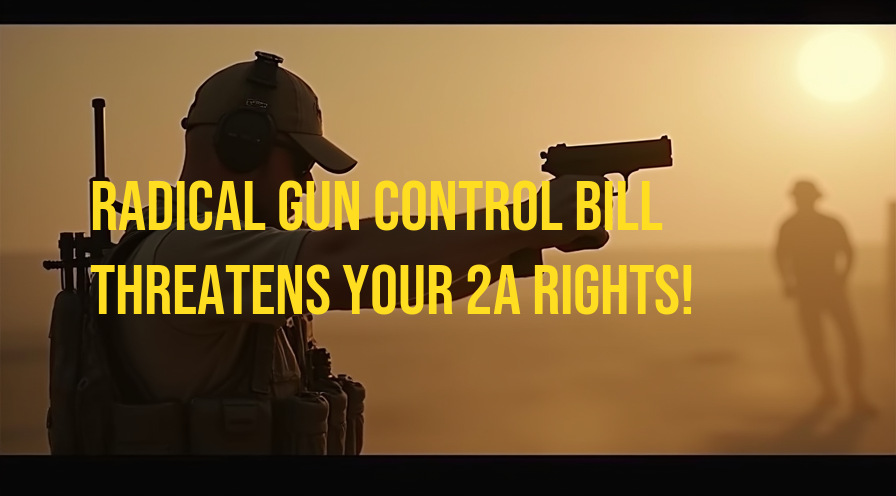
Imagine walking into your favorite gun shop, cash in hand, ready to buy the latest and greatest handgun you’ve been eyeing for months. But the person behind the counter shakes their head. “Sorry,” they say, “that model isn’t on the state Handgun Roster.” These restrictive lists, championed by anti-gun politicians, dictate which firearms you’re allowed to purchase, effectively strangling the market and infringing on your Second Amendment rights. It’s a bureaucratic blockade designed to limit your choices and, ultimately, your ability to defend yourself and your family. But a new piece of federal legislation is fighting back, and it’s time we all understood what’s at stake.
What is a Handgun Roster and Why is it Controversial?
A handgun roster, or “approved handgun list,” is a state-mandated catalog of specific handgun models that are legal for sale to the public. States like California and New York are notorious for these lists, which they claim are for “safety.” However, the requirements for getting a new firearm approved are often so strict that most manufacturers cannot comply, leaving citizens with fewer options.
The controversy lies in the ever-shrinking nature of these lists and the impossible-to-meet criteria. For example, California’s roster has notoriously required features like magazine disconnect safeties and, most egregiously, microstamping technology—a flawed and unworkable concept. As manufacturers update their models with better ergonomics, improved sights, or superior materials, they often have to re-submit them for approval. If the new model doesn’t meet the latest, often impossible, criteria, it gets rejected. The result? The list of available guns gets smaller and smaller each year, leaving citizens with access to an increasingly outdated selection of firearms.
The Real-World Impact on Gun Owners
For the average person, this means you can’t buy many of the most popular and trusted handguns on the market today. That brand-new Glock, Sig Sauer, or Smith & Wesson that just received rave reviews? Forget about it if you live in a roster state. This isn’t just an inconvenience; it’s a direct assault on the core principles of the Second Amendment. It limits your ability to choose the firearm that best suits your needs, whether for self-defense, competition, or sport. These Gun Laws effectively create a tiered system of rights, where citizens in some states have fewer options than others simply because of their zip code.
The Modern Firearm Safety Act: A Beacon of Hope
Fortunately, some lawmakers are fighting back against this blatant overreach. Representatives Darrell Issa (R-CA) and Elise Stefanik (R-NY) recently introduced the Modern Firearm Safety Act. This crucial piece of legislation aims to prohibit states from enforcing these restrictive handgun rosters. It’s a direct challenge to the anti-gun lobby’s strategy of slowly bleeding the Second Amendment dry through a thousand bureaucratic cuts.
The bill recognizes that these rosters do nothing to enhance public safety and instead penalize lawful gun owners and manufacturers. It seeks to restore a free and open market where consumers can decide for themselves which features and firearms are best for them. The NRA’s Institute for Legislative Action (NRA-ILA) has thrown its full support behind the bill, highlighting the absurdity of these state-level restrictions.
This powerful statement gets to the heart of the matter. These rosters aren’t about safety; they are a political tool designed to make the process of how to buy a gun so difficult and limited that people simply give up. The Modern Firearm Safety Act is a necessary step to push back against this cynical agenda.
Microstamping: The Impossible Mandate
One of the most infamous requirements tied to California’s handgun roster is microstamping. The idea sounds like something out of a sci-fi movie: every time a gun is fired, it stamps a unique microscopic code>
How Handgun Rosters Affect Gun Shops and Consumers
The impact of handgun rosters extends beyond just limiting choice. Local gun shops in roster states are hit particularly hard. They are forced to carry a limited, often outdated, inventory. When a customer comes in asking for a popular new model, they have to turn them away, losing a sale and potentially a long-term customer. This puts them at a significant disadvantage compared to shops in free states.
For consumers, the consequences are equally frustrating. They are often forced to buy Used Guns on the private market if they want a non-rostered model, which can be a more complex process. With these restrictions, finding a new handgun can feel like a long shot. It's no wonder people are turning to platforms like AmericanGunTrader.com instead of getting tangled in the red tape of state-approved lists, which frankly, aren't even a good Armslist of available options. These laws create a bizarre secondary market where off-roster guns sell for two or three times their original price. It's a classic case of government regulation creating the very problem it claims to solve: making firearms less accessible for law-abiding citizens while doing nothing to deter criminals.


Comments
This article has 8 comments. Login to share your thoughts!
Login to CommentJoin the discussion and connect with other members