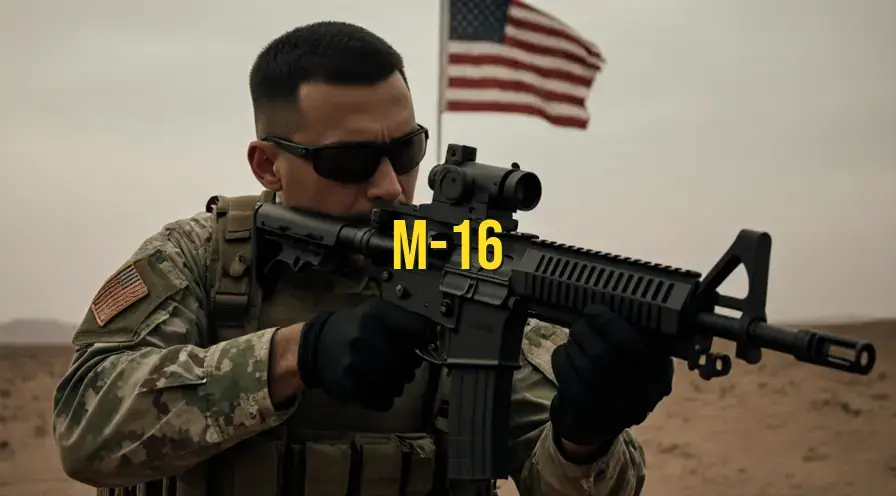
The M-16 is more than just a rifle - it is a symbol of American ingenuity, military power, and firearm innovation. Whether you are a history buff, a collector, or someone looking to buy firearms online, understanding the M-16's legacy and features is essential. In this comprehensive guide, we will explore the M-16's history, variations, legal considerations, and how it compares to other iconic firearms. If you are considering adding an M-16 or its civilian variants to your collection, this article covers everything you need to know.
The History and Evolution of the M-16 Rifle
The M-16 was first adopted by the U.S. military in the 1960s, quickly becoming the standard-issue service rifle for American forces. Designed by Eugene Stoner, the original M-16 brought lightweight construction and high-capacity magazines to the battlefield, revolutionizing infantry tactics. Over the decades, the M-16 has evolved through several generations, including the M16A1, M16A2, M16A3, and M16A4, each with improvements in reliability, accuracy, and ergonomics.
Key Milestones in M-16 Development
- 1964: M-16 adopted by the U.S. Air Force and Army.
- Vietnam War: The rifle sees widespread use, leading to important design changes.
- 1980s: Introduction of the M16A2 with burst fire mode and improved sights.
- Modern Era: The M-16 platform spawns the M4 carbine and countless civilian AR-15 variants.
M-16 vs. AR-15: What Are the Differences?
Many enthusiasts and new buyers often confuse the M-16 with the AR-15. While they share a similar appearance and operating system, there are crucial differences:
- M-16: Select-fire (capable of semi-auto and burst/auto), regulated under the National Firearms Act (NFA).
- AR-15: Civilian-legal, semi-automatic only, available from countless manufacturers.
If you are interested in the legal aspects of select-fire weapons, check out our guide on the National Firearms Act and how it impacts ownership.
Buying an M-16: Legal Considerations and Process
Owning a true M-16 (select-fire) is tightly regulated in the United States. Only M-16s manufactured before May 19, 1986, are transferable to civilians, and the process involves:
- Finding a transferable M-16 through a licensed dealer or private sale
- Completing ATF Form 4 and passing a thorough background check
- Paying a $200 tax stamp and waiting for ATF approval
For most buyers, modern AR-15s and other semi-auto rifles offer similar performance without the legal hurdles. If you want to explore more options, American Gun Trader is a top destination for guns for sale and connecting with reputable dealers.
Where to Buy Firearms Online
Online platforms like American Gun Trader make it easy to browse listings, compare prices, and connect with FFL dealers. Always ensure you comply with federal, state, and local laws when purchasing firearms online.
M-16 Features: What Sets It Apart?
The M-16's reputation is built on several key features:
- Lightweight Aluminum Receiver: Easier handling and reduced fatigue for soldiers
- 5.56x45mm NATO Chambering: High-velocity, low-recoil cartridge for accuracy and control
- Direct Impingement Gas System: Simpler design, though it requires regular cleaning
- Modularity: Easily accepts optics, rails, and accessories
Performance and Reliability
Modern M-16s and their civilian counterparts are known for their accuracy and customizable nature. With proper maintenance, these rifles deliver dependable performance in a wide range of conditions.
Comparing the M-16 to Other Iconic Rifles
The M-16 stands alongside other legendary firearms like the AK-47, M14, and FN FAL. Here is how it stacks up:
- AK-47: Renowned for ruggedness, but less accurate at long range
- M14: Powerful 7.62x51mm NATO cartridge, heavier and less modular
- FN FAL: Battle-proven, but bulkier than the M-16
For a deeper dive into the M14, see our M14 comprehensive guide.
Commercial and Informational Uses of the M-16
While the M-16 is primarily a military rifle, its design has influenced countless commercial firearms. Law enforcement agencies, security contractors, and civilian shooters all benefit from the M-16's modularity and proven performance. The civilian AR-15 market is booming, with options for hunting, competition, and home defense.
Why the M-16 Remains Popular
- Proven track record in military and law enforcement
- Wide range of aftermarket parts and upgrades
- Strong community support and training resources
Maintaining Your M-16 or AR-15
Proper maintenance is crucial for reliability. Regular cleaning, lubrication, and inspection will keep your rifle running smoothly. Many owners turn to guides and videos for tips on cleaning and troubleshooting.
Recommended Maintenance Practices
- Clean the bore and chamber after each use
- Inspect the bolt carrier group for wear
- Lubricate moving parts to prevent corrosion
Frequently Asked Questions About the M-16
- Can civilians own an M-16? Yes, but only pre-1986 transferable models and with strict ATF oversight.
- What is the difference between the M-16 and AR-15? The M-16 is select-fire; the AR-15 is semi-auto only.
- Is the M-16 reliable? Modern versions are highly reliable with proper care.
"The M-16 family of rifles has served as the backbone of the U.S. military for over 50 years, adapting to the changing needs of soldiers and law enforcement."
– Military.com
Conclusion: The Enduring Legacy of the M-16
The M-16 is a firearm icon, influencing generations of shooters and shaping the modern rifle market. Whether you are interested in its military history, legal ownership, or commercial variants, the M-16 continues to set the standard for reliability and performance. If you are ready to explore your options, visit American Gun Trader to find the best deals and connect with knowledgeable sellers. Stay informed, stay safe, and exercise your Second Amendment rights responsibly.


Comments
This article has 8 comments. Login to share your thoughts!
Login to CommentJoin the discussion and connect with other members