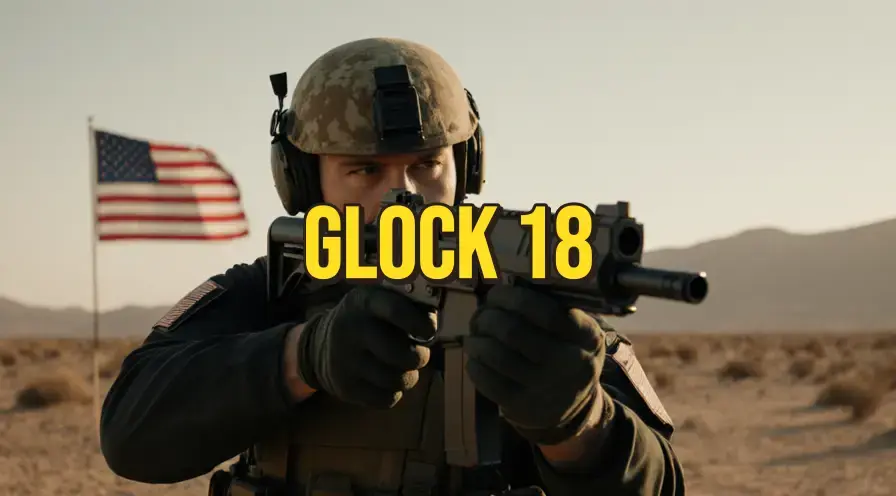
The Glock 18 is a select-fire variant of the popular Glock pistol, distinguished by its ability to fire in both semi-automatic and fully automatic modes. This capability places it in a unique category, primarily designated for military and law enforcement agencies. Understanding its technical specifications, operational nuances, and legal framework is crucial for those authorized to possess and utilize this distinctive firearm.
What makes the Glock 18 a select-fire firearm?
The Glock 18 is a select-fire firearm because it incorporates a mechanism that allows the user to switch between semi-automatic fire and fully automatic fire. This is typically controlled by a selector switch integrated into the slide. Unlike standard semi-automatic Glocks, the 18 can discharge multiple rounds with a single pull of the trigger when set to automatic mode, making it a machine pistol.
Mechanism of Select-Fire Operation
The select-fire capability of the Glock 18 is achieved through a specific internal design that differs from its semi-automatic counterparts. The core of this distinction lies in the fire control mechanism. When the selector switch, usually located on the rear of the slide, is moved to the 'auto' position, it alters the pistol's engagement with the trigger mechanism. In semi-automatic mode, the trigger must be released and re-pressed for each shot. In automatic mode, however, the mechanism is designed to continue firing as long as the trigger is held down and ammunition is available.
The selector switch on the Glock 18 serves a dual purpose: it acts as the selector for firing mode (safe/semi/auto) and also functions as the slide lock when set to the 'safe' or 'auto' position, preventing the slide from cycling. This is a safety feature designed to prevent accidental discharge or unintended full-auto fire.
Technical Specifications and Variants
The Glock 18 is based on the Glock 17 platform but features modifications to enable full-automatic fire. It is most commonly found in the full-size variant, mirroring the Glock 17's dimensions and ergonomics. However, adaptations for compact models have also been developed, though less common.
Glock 18 vs. Glock 17: A Comparative Analysis
The most significant difference between the Glock 18 and its semi-automatic sibling, the Glock 17, is the presence of the select-fire capability in the former. This distinction is not merely cosmetic; it involves internal component changes and a different slide design to accommodate the automatic firing mechanism and selector switch. The Glock 18 typically features a modified slide with a serrated rear section to house the selector lever.
In our marketplace data, the Glock 17 remains a dominant force in the civilian semi-automatic pistol market due to its availability and legal status. The Glock 18, conversely, is far more restricted, with its civilian ownership generally prohibited in most jurisdictions, including the United States, without specific rare licenses. This scarcity significantly impacts its market presence and availability for non-governmental entities.
Glock 18C Variant
A notable variant is the Glock 18C. The 'C' designation signifies ‘compensated’. This model features ports or cuts in the barrel and slide. These compensator ports are designed to reduce muzzle rise during firing, particularly noticeable in the high rate of fire associated with fully automatic discharge. This feature enhances controllability, allowing for more accurate follow-up shots in burst or automatic fire.
| Feature | Specification |
|---|---|
| Caliber | 9x19mm Parabellum |
| Action | Semi-automatic / Fully automatic (Select-fire) |
| Frame Material | Polymer |
| Slide Material | Steel (Tenifer treated) |
| Weight (unloaded) | Approx. 625 g (1.38 lbs) |
| Length | Approx. 202 mm (7.95 in) |
| Barrel Length | Approx. 114 mm (4.49 in) |
| Height | Approx. 138 mm (5.43 in) |
| Magazine Capacity (Standard) | 17 rounds (larger capacity magazines available) |
| Sights | Fixed or adjustable |
| Trigger Pull | Approx. 2.5 kg (5.5 lbs) |
| Selector Mechanism | Integrated into slide (Safe/Semi/Auto) |
Operational Considerations and Performance
The Glock 18’s primary operational distinction is its cyclic rate of fire. In fully automatic mode, it can achieve a very high rate of fire, often exceeding 1000 rounds per minute. This rapid discharge requires significant shooter discipline and training to manage recoil and maintain control.
Recoil Management and Control
Managing recoil on a select-fire pistol, especially one with a high cyclic rate, is paramount. The Glock 18, while designed with ergonomics in mind, still presents a challenge. The ported barrel in the 18C variant aids in mitigating muzzle climb, but proper grip, stance, and trigger control remain essential for effective use. Sustained automatic fire necessitates frequent reloads due to the high ammunition expenditure.
Ammunition and Magazine Options
The Glock 18 typically utilizes standard 9x19mm Parabellum ammunition. While the standard magazine capacity is 17 rounds, mirroring the Glock 17, higher capacity magazines are readily available and often employed with this model to sustain fire for longer durations. Extended magazines, such as 31-round or even 50-round drum magazines, are compatible and commonly seen in contexts where full-automatic fire is utilized.
Legal Status and Acquisition
The legal status of the Glock 18 is the most significant factor differentiating it from other Glock models. In the United States, automatic firearms are heavily regulated under the National Firearms Act (NFA) of 1934 and the Firearm Owners' Protection Act (FOPA) of 1986. Transferable machine guns manufactured after May 19, 1986, are generally prohibited for civilian ownership.
Civilian Ownership Restrictions
Due to its classification as a machine gun, civilian ownership of the Glock 18 is severely restricted in the United States. For a civilian to legally acquire a machine gun, it must have been manufactured and registered before May 19, 1986. Since the Glock 18 was introduced after this date, it is not generally available for civilian purchase. Exceptions exist for licensed dealers, manufacturers, and individuals with special permits, but these are exceptionally rare and costly.
Law Enforcement and Military Use
The primary intended users of the Glock 18 are law enforcement agencies and military units worldwide. Its compact size, reliability, and select-fire capability make it a suitable option for specialized tactical situations where a sidearm with increased firepower is required. Its adoption by these organizations underscores its effectiveness and reliability in demanding operational environments.
Glock 18 in the Collector's Market
The collector's market for the Glock 18 is highly specialized and largely theoretical for most individuals due to the stringent legal barriers to ownership. Any Glock 18 that might be legally transferable would be a pre-1986 sample, making it an extremely rare and valuable item. These pieces are typically held by established collectors or museums.
Rarity and Value of Pre-1986 Samples
Based on current inventory trends and historical data for NFA-regulated items, a legally transferable Glock 18, if one were to surface, would command a significant premium. Its value would be driven by its rarity, historical significance, and the current demand within the niche market of NFA collectors. Such items are often sold through specialized auctions and require extensive legal paperwork, including federal registration and a tax stamp, for transfer.
Conclusion
The Glock 18 represents a unique intersection of Glock's renowned reliability and the tactical advantage of select-fire capability. While its technical specifications and performance characteristics are impressive, its restricted legal status, particularly for civilian ownership, defines its place in the firearms landscape. Primarily a tool for government agencies, its allure as a collectible is tempered by the significant legal and financial hurdles involved in its acquisition, making it one of the most exclusive firearms in the Glock lineup.

Comments
No comments yet. Be the first to share your thoughts!
Login to CommentJoin the discussion and connect with other members