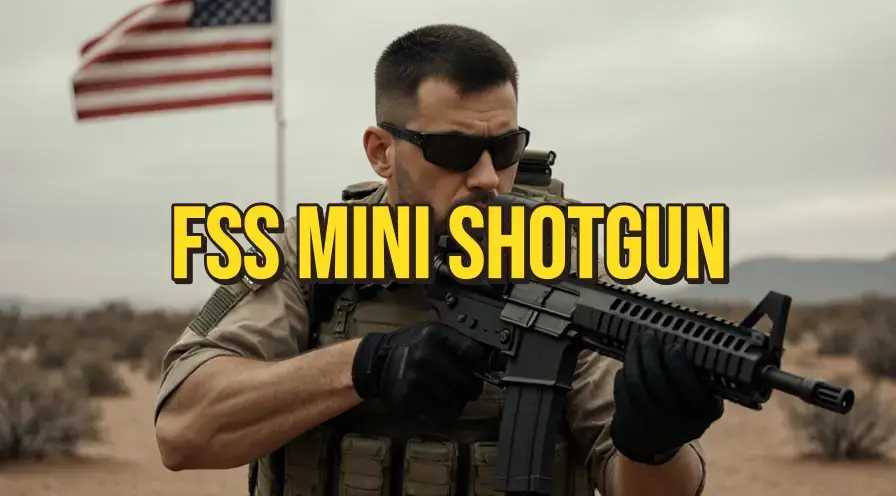
The FSS Mini Shotgun: A Compact Firearm for Specific Use Cases
The FSS mini shotgun represents a niche segment of the firearm market, characterized by its significantly reduced barrel length and overall dimensions compared to traditional shotguns. These compact firearms are engineered for specific applications where maneuverability and concealability are paramount. Their design prioritizes utility in confined spaces, making them a subject of interest for individuals seeking specialized tools for personal defense, certain sporting applications, or as unique collector's items. Understanding their legal standing, operational characteristics, and market availability is crucial for informed acquisition and responsible ownership.
Understanding the FSS Mini Shotgun Design and Functionality
At its core, an FSS mini shotgun is a firearm designed to fire shotgun shells but in a drastically smaller package. The ‘FSS’ designation typically refers to specific manufacturers or proprietary designs that emphasize compactness. These firearms often feature shortened barrels, sometimes below the legal minimums for standard shotguns, which necessitates careful consideration of federal and state regulations. The action type can vary, including pump-action, semi-automatic, or even single-shot mechanisms, adapted to the scaled-down frame. Ammunition capacity is generally limited due to the smaller receiver and magazine size. The recoil impulse, while potentially more pronounced due to the reduced mass of the firearm, is a key factor in handling and shootability.
Barrel Length and Legal Implications
The defining characteristic of most mini shotguns, including those potentially falling under the FSS designation, is their exceptionally short barrel. Federal law in the United States classifies shotguns by having a barrel of 18 inches or more and an overall length of 26 inches or more. Firearms with barrels shorter than 18 inches, or an overall length less than 26 inches, are generally classified as Short-Barreled Shotguns (SBS) under the National Firearms Act (NFA). Possession and transfer of NFA-regulated items require registration with the Bureau of Alcohol, Tobacco, Firearms and Explosives (ATF), payment of a federal tax stamp, and adherence to specific transfer procedures. It is imperative for any prospective owner to verify the exact barrel length and overall dimensions of an FSS mini shotgun to determine its legal classification in their jurisdiction. Local and state laws can impose additional restrictions or outright bans on such firearms.
Ammunition Considerations for Mini Shotguns
While designed to fire standard shotgun shells, the performance characteristics of an FSS mini shotgun with respect to ammunition can differ significantly from its full-sized counterparts. Due to the shorter barrel, the velocity and patterning of shotshells will be reduced. This means that the effective range and terminal ballistics will be less than what one might expect from a standard 12-gauge or 20-gauge shotgun. Specialized ammunition, such as reduced-recoil loads or specific slug types, might be considered to mitigate recoil and improve accuracy. However, the primary limitation remains the firearm’s inherent design and barrel length. The selection of ammunition should always prioritize safety and compatibility with the specific firearm model, and users should consult manufacturer recommendations.
Market Availability and Acquisition Trends
Based on current inventory trends and marketplace data, FSS mini shotguns, or firearms fitting this description, represent a specialized segment. They are not typically mass-produced by major firearm manufacturers in the same volume as conventional shotguns. Their availability is often found through custom gunsmiths, specialized dealers, or as pre-owned items. The acquisition process for any firearm classified under the NFA, including short-barreled shotguns, involves a more complex legal framework than for standard firearms. Buyers must navigate federal registration, background checks, and potentially state-specific waiting periods and prohibitions. The price point can also vary widely, influenced by the rarity, manufacturer, condition, and any custom modifications.
Technical Specifications and Comparative Analysis
To provide a clearer understanding of the FSS mini shotgun's place in the market, a comparison with more conventional shotgun types is informative. While exact specifications for a generic 'FSS mini shotgun' are elusive due to its potentially custom or niche nature, we can extrapolate based on common characteristics of compact shotguns. The following table illustrates a hypothetical comparison focusing on key metrics relevant to performance and legal classification.
| Feature | FSS Mini Shotgun (Hypothetical) | Standard Pump-Action Shotgun (e.g., 12 Gauge) | Compact Tactical Shotgun (e.g., 20 Gauge) |
|---|---|---|---|
| Barrel Length | Typically < 18 inches | 18 to 30 inches | 14 to 18 inches |
| Overall Length | Typically < 26 inches | 26 to 40+ inches | 26 to 30 inches |
| Gauge | Often 12, 20, or .410 | Commonly 12, 20, 16, .410 | Commonly 20, 12 |
| Weight (Unloaded) | 3-5 lbs | 6-8 lbs | 5-7 lbs |
| Magazine Capacity | 2-5 rounds | 4-8 rounds | 3-6 rounds |
| NFA Classification | Likely Short-Barreled Shotgun (SBS) | Generally not NFA regulated | May be NFA regulated if barrel < 18 inches |
| Primary Use Case | Extreme close-quarters, specialized utility | Hunting, sport shooting, home defense, law enforcement | Home defense, tactical applications, smaller-framed shooters |
| Ammunition Velocity | Lower | Higher | Moderate |
| Pattern Density at Range | Reduced | Higher | Moderate |
This comparison highlights that the FSS mini shotgun prioritizes extreme compactness over the ballistic performance and capacity of larger shotguns. The NFA classification is a significant differentiator, adding a layer of regulatory complexity not present for most standard shotguns.
Legal Considerations for Ownership and Use
Owning an FSS mini shotgun requires a thorough understanding of federal, state, and local firearm laws. As previously noted, firearms with barrels shorter than 18 inches are generally classified as Short-Barreled Shotguns (SBS) under the National Firearms Act (NFA). Acquisition of an NFA item involves submitting an ATF Form 4, undergoing a federal background check, paying a $200 tax stamp, and waiting for ATF approval, which can take several months. Furthermore, individuals must reside in a state that permits NFA item ownership. Some states have additional registration requirements or outright bans on SBS firearms, regardless of federal law.
Federal Regulations and the NFA
The National Firearms Act (NFA) of 1934 is the primary federal legislation governing certain types of firearms, including short-barreled shotguns. An FSS mini shotgun, by virtue of its likely short barrel, falls under this act. The ATF maintains a registry of all NFA items. Transferring an NFA item requires a transfer tax and approval from the ATF. Possessing an unregistered NFA item can lead to severe criminal penalties, including substantial fines and lengthy prison sentences. The process for acquiring an NFA item is designed to be deliberate and requires significant due diligence from the prospective owner. This includes ensuring the firearm is legally manufactured or imported and that all paperwork is completed accurately.
State and Local Laws: A Patchwork of Regulations
Beyond federal statutes, each state and many municipalities have their own set of firearm regulations. These can range from outright bans on certain types of firearms, including SBS, to specific licensing, registration, or magazine capacity restrictions. For example, some states may have a minimum barrel length requirement that exceeds the federal 18-inch standard for shotguns, effectively prohibiting firearms that are legal at the federal level. It is the responsibility of the firearm owner to be intimately familiar with the laws in their state of residence and any state they intend to travel to with the firearm. Ignorance of the law is not a valid defense. Consulting with local law enforcement or legal counsel specializing in firearm law is highly recommended before acquiring or possessing an FSS mini shotgun.
Practical Applications and Scenarios
The unique design of the FSS mini shotgun lends itself to specific, albeit limited, practical applications. Its compact size makes it highly maneuverable, which can be advantageous in extremely confined environments. However, the trade-offs in terms of ballistic performance and increased recoil must be carefully weighed against these benefits.
Home Defense in Confined Spaces
For individuals living in very small dwellings, such as tiny homes or RVs, where space is at an absolute premium, a highly compact firearm like an FSS mini shotgun might be considered for home defense. Its reduced length allows for easier handling and less risk of accidental discharge or snagging on furniture during movement within tight quarters. However, the effectiveness of a mini shotgun for home defense is significantly limited by its reduced projectile velocity and spread at typical engagement distances within a home. The potential for over-penetration through walls, a concern with all firearms, may also be exacerbated by the specific ammunition used and the firearm's characteristics. Responsible ownership includes extensive training and understanding of the firearm's limitations.
Specialized Sporting and Recreational Use
While not a conventional choice for most hunting or sport shooting disciplines, an FSS mini shotgun could find niche applications. For certain types of pest control in extremely tight areas or for specialized competitive shooting events that emphasize maneuverability with a firearm, its compact nature might offer an advantage. However, for traditional hunting, the reduced range and ballistic performance make it largely unsuitable. Shooters interested in this category should thoroughly research specific events or activities where such a firearm might be permitted and advantageous, acknowledging that standard shotguns are generally preferred for their versatility and performance.
Collector Interest and Historical Significance
The FSS mini shotgun, particularly if it represents a specific manufacturer’s innovative design or a historically significant variant, can appeal to firearm collectors. The ingenuity required to produce a functional shotgun in such a small form factor, while navigating legal and engineering challenges, can be of interest to enthusiasts. The rarity and craftsmanship associated with certain mini shotguns can drive their value within the collector’s market. As with any collectible firearm, understanding its provenance, condition, and legal status is paramount for both investment and safe enjoyment.
Conclusion: A Niche Firearm Requiring Diligence
The FSS mini shotgun is a specialized firearm that demands a high degree of knowledge and responsibility from its owner. Its compact design offers unique advantages in specific scenarios, but these are often offset by reduced ballistic performance and significant legal complexities due to its likely classification as a Short-Barreled Shotgun under federal law. Prospective buyers must conduct thorough research into federal, state, and local regulations, understand the NFA process, and be prepared for the increased scrutiny and requirements associated with owning such a firearm. Responsible ownership, coupled with comprehensive training, is essential for anyone considering the acquisition of an FSS mini shotgun.

Comments
No comments yet. Be the first to share your thoughts!
Login to CommentJoin the discussion and connect with other members