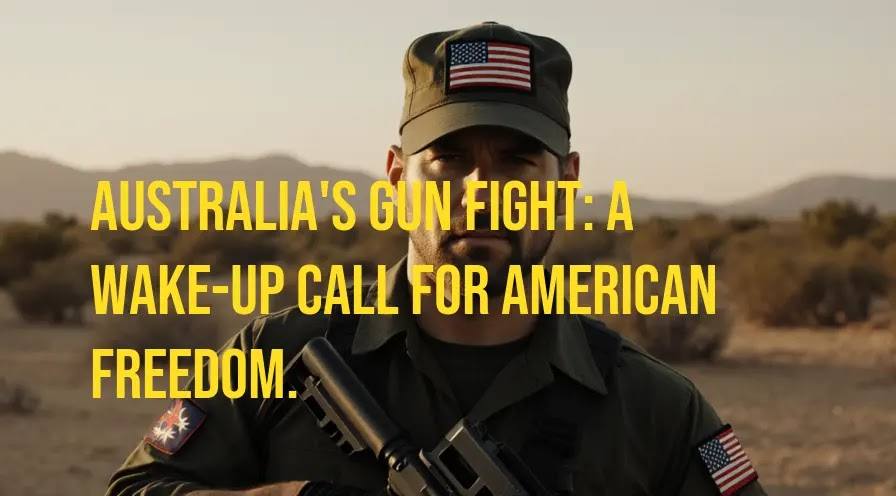
In the ongoing global conversation about firearms, the Second Amendment, and individual liberties, Australia often emerges as a contentious example. Proponents of strict gun control frequently point to the island nation's sweeping 1996 National Firearms Agreement (NFA) as a model for the world. However, a closer look reveals a far more complex and troubling picture. A recent push in New South Wales to loosen some restrictions for hunting purposes has reignited the debate, exposing the deep emotional scars and practical failures of Australia's draconian gun laws. For American gun owners, this story from Down Under is more than just foreign news; it's a critical case study in what happens when rights are legislated away in the name of safety, often with devastatingly ineffective results.
The Heartbreak Behind Australia's Gun Laws
To understand the current state of firearm ownership in Australia, we must first revisit the tragedy that started it all: the 1996 Port Arthur massacre. It was a horrific event that left 35 people dead and a nation in mourning. In the aftermath, the government, led by then Prime Minister John Howard, enacted the NFA, which banned a wide range of semi-automatic and pump-action firearms and implemented a mandatory buyback program. One of the most powerful voices advocating for these changes was Walter Mikac, a man who lost his wife and two young daughters in the attack. His pain is unimaginable, and his initial crusade for stricter laws is deeply understandable. However, nearly three decades later, Mr. Mikac finds himself back in the public eye, this time fighting against a bill designed to ease restrictions for hunters dealing with feral animals.
"I would happily just go off into the sunset and get on with my normal life but I was quite blind-sided by the extent of this bill. All it is really is a wishlist for the gun lobby and a weakening of the laws."
– Tom Knighton
Mr. Mikac's words are a poignant reminder of the human cost of violence. Yet, they also highlight a fundamental disconnect in the gun control debate. The new legislation isn't about arming the general populace for self-defense; it's a targeted measure to allow hunters to more effectively manage destructive feral animal populations, a significant problem in Australia. The opposition to even this minor adjustment reveals how the conversation has shifted from preventing mass violence to opposing any form of private firearm ownership, regardless of its purpose.
From Tragedy to Tyranny: The National Firearms Agreement
The National Firearms Agreement was presented as a definitive solution. By severely restricting the types of firearms available and creating a national registry, the government promised a safer Australia. The initial buyback collected over 650,000 newly prohibited firearms, and the law was hailed internationally as a success. However, the reality on the ground tells a different story. The Australian government has since held numerous gun amnesties, collecting tens of thousands of illegal firearms that were never turned in. This proves a point that American gun owners have long understood: criminals do not follow gun laws. Banning certain types of guns for sale only disarms law-abiding citizens, leaving them vulnerable to those who acquire weapons through illicit means.

The Australian experience demonstrates that a piece of paper does not stop a determined criminal. While legal avenues for purchasing firearms were shut down for many, a thriving black market emerged. Today, it's clear that the NFA did not eradicate gun violence but simply changed its dynamics, leaving law-abiding citizens at a distinct disadvantage. The idea that you can't find guns for sale in Australia is a myth; you just can't find them in a legitimate, regulated gun store that serves responsible citizens.
A Hunter's Right or a Lobbyist's Wishlist?
The current bill in New South Wales seeks to enshrine a "right to hunt" in law, specifically for managing feral animal populations on state lands. For an American, the idea that one would need a special law to grant this right seems absurd, but in Australia, it represents a significant step forward for firearms owners. The opposition, however, views it as a dangerous chipping away at the NFA's legacy. They see it not as a practical tool for conservation but as a concession to a so-called "gun lobby."
This perspective fails to acknowledge the very real need for animal control in Australia, a country famous for its dangerous wildlife and invasive species. Consider these points:
- Feral animals like pigs, deer, and foxes cause millions of dollars in agricultural damage annually.
- Invasive species threaten native wildlife and delicate ecosystems.
- The military famously lost a "war" to emus in the 1930s, highlighting the difficulty of managing large animal populations.
The American Perspective: Why the Second Amendment Isn't About Hunting
The debate in Australia throws the purpose of the American Second Amendment into sharp relief. As Tom Knighton notes in his article, a frequent argument from gun control advocates is that certain firearms are unnecessary for hunting. This completely misses the point. The Second Amendment was never about ensuring a citizen's ability to hunt deer. It was about ensuring a citizen's ability to resist tyranny and defend themselves, their family, and their property. It is a check on government power, a concept that is entirely foreign to the Australian legal framework.
The Ineffectiveness of Australian Gun Control
The constant need for gun amnesties in Australia is the most glaring evidence of the NFA's failure. If the buyback and ban had worked, there would be no significant pool of illegal firearms left to turn in. Yet, year after year, the government collects thousands of unregistered weapons. This cycle demonstrates that you cannot legislate away demand. While law-abiding citizens are forced to navigate a maze of regulations, those operating outside the law continue to buy and sell firearms on platforms far shadier than any legitimate `Guntrader` or `Armslist` website. While some politicians treat gun laws like statues, they forget that a statue can't protect you from a feral hog. For that, you need something from a real gun store, not a symbolic gesture.
Lessons for American Gun Owners
The situation in Australia is a sobering lesson. It shows how quickly a tragedy can be leveraged to strip citizens of their rights, with little evidence of long-term success in preventing crime. For Americans, it underscores the importance of a strong Second Amendment and a vigilant community of gun owners. It's a reminder to stay educated, engaged, and united.
Understanding the nuances of firearms ownership is more critical than ever. Whether you're a first-time buyer or a seasoned collector, knowing the law and best practices is paramount. Resources that explain how to buy a gun legally and responsibly are invaluable. Likewise, for those looking to downsize their collection or make a change, understanding how to sell a gun properly is just as important. It is through responsible action and education that we protect our rights from the kind of emotional, reactionary legislation that has failed Australia.
Conclusion: A Call to Vigilance
Australia's nearly 30-year experiment with stringent gun control has not created the utopia its proponents promised. It has disarmed law-abiding citizens while a black market for firearms continues to thrive. The current debate over a modest hunting bill reveals an entrenched opposition to any form of gun ownership, no matter how reasonable or necessary. For Americans, this serves as a stark warning. The rights we hold dear are not guaranteed; they must be constantly defended through education, responsible ownership, and active participation in the political process. Join the AmericanGunTrader.com community to stay informed, connect with fellow patriots, and help safeguard the freedoms that make our nation unique.

Comments
This article has 10 comments. Login to share your thoughts!
Login to CommentJoin the discussion and connect with other members