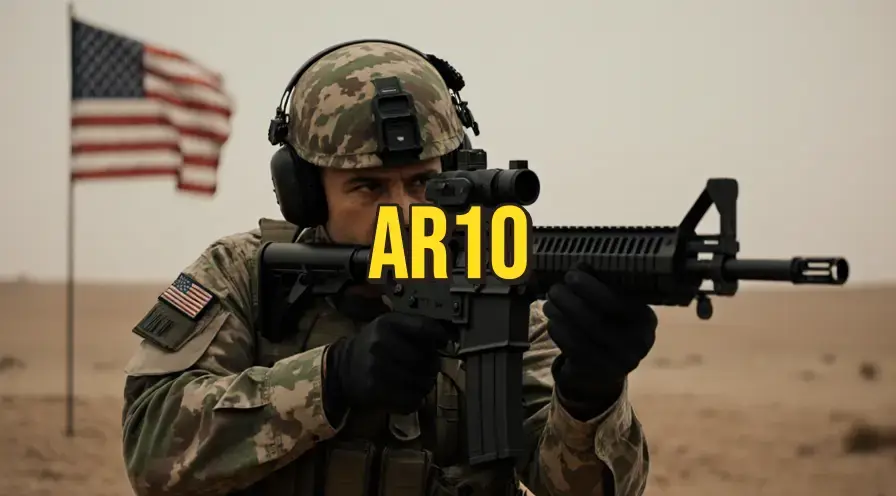
The AR10 platform represents a significant evolution in semi-automatic rifle design, offering enhanced range, stopping power, and versatility compared to its smaller AR-15 sibling. Developed by Eugene Stoner at ArmaLite in the late 1950s, the AR10 was designed to chamber larger, more potent cartridges, primarily the .308 Winchester (7.62x51mm NATO). While initially overshadowed by the AR-15 and later military adoption of the M14, the AR10 has experienced a substantial resurgence in the commercial market, becoming a favorite among hunters, competitive shooters, and tactical enthusiasts.
What is the AR10 platform and why is it significant?
The AR10 platform is a gas-operated, rotating-bolt semi-automatic rifle system chambered in full-power rifle cartridges, most commonly .308 Winchester. Its significance lies in its ability to deliver the modularity and ergonomic advantages of the AR-15 design while utilizing cartridges capable of engaging targets at extended ranges and delivering greater terminal ballistics. This makes it a highly capable firearm for various applications, from precision shooting to large game hunting.
Historical Context and Evolution
The original AR10 was a groundbreaking design for its time, featuring extensive use of lightweight alloys and a direct impingement gas system. While ArmaLite’s initial production run was limited, the design's principles were carried forward, notably influencing the AR-15. The modern AR10 landscape is populated by numerous manufacturers, each offering variations on the core design. These manufacturers have introduced improvements and expanded caliber options, solidifying the AR10's place in the modern firearms ecosystem.
Key Caliber Options for the AR10 Platform
The defining characteristic of the AR10 platform is its chambering in larger cartridges. While the .308 Winchester remains the most prevalent, the platform has been adapted for a growing array of calibers, each offering distinct ballistic properties and intended uses. Understanding these calibers is crucial for selecting an AR10 suited to specific needs.
.308 Winchester (7.62x51mm NATO)
This is the quintessential AR10 cartridge. It offers a superb balance of range, energy, and manageable recoil for its power. The .308 Winchester excels in precision shooting, long-range engagements, and as a capable hunting round for medium to large game. Its widespread availability and extensive selection of ammunition types make it a practical choice for most AR10 owners.
.300 Blackout (7.62x35mm)
While often associated with AR-15 platforms, the .300 Blackout has also found a home in AR10-style rifles, particularly those seeking suppressed performance or close-quarters capability. It is designed to perform well from short barrels and is effective both supersonic and subsonic, making it versatile for various tactical and hunting scenarios where noise reduction is a priority. However, its effective range is significantly less than the .308 Winchester.
.260 Remington / 6.5mm Creedmoor
The emergence of cartridges like the 6.5mm Creedmoor and .260 Remington has revolutionized long-range shooting, and the AR10 platform has been a prime beneficiary. These cartridges offer flatter trajectories, less wind drift, and less recoil than the .308 Winchester, while still delivering sufficient energy for many hunting applications. In our marketplace data, rifles chambered in 6.5mm Creedmoor have seen a dramatic increase in demand among competitive shooters and those seeking optimized long-range performance.
Other Notable Calibers
The adaptability of the AR10 platform extends to other calibers such as .243 Winchester, .338 Federal, and even larger magnum cartridges in specialized builds. Each brings unique ballistic characteristics, influencing range, energy, and recoil.
AR10 vs. AR15: A Comparative Analysis
The fundamental difference between the AR10 and AR15 lies in their intended role and chambering. The AR15, designed for intermediate cartridges like the .223 Remington/5.56x45mm NATO, prioritizes lighter weight, higher magazine capacity, and lower recoil, making it ideal for military service, self-defense, and sport shooting where extreme range or terminal energy is not the primary concern. The AR10, conversely, is built for full-power rifle cartridges, offering superior ballistic performance at extended distances and increased terminal energy for hunting larger game or engaging threats at greater ranges. Based on current inventory trends, the demand for AR10 platforms in .308 Winchester and 6.5mm Creedmoor remains robust for precision shooting and hunting applications.
Technical Specifications and Components
The AR10 platform shares much of its core design philosophy with the AR-15, including its modular construction, direct impingement gas system, and use of a rotating bolt. However, the larger cartridges necessitate scaled-up components and receiver dimensions. This includes a larger upper and lower receiver, a beefier bolt carrier group, and typically a heavier barrel profile to manage heat and maintain accuracy during sustained firing.
| Feature | AR15 (Typical) | AR10 (Typical .308) |
|---|---|---|
| Receiver Size | Standard (DPMS, Aero Precision Pattern) | Larger (DPMS, Armalite Pattern) |
| Cartridge | 5.56x45mm NATO / .223 Remington | .308 Winchester / 7.62x51mm NATO |
| Barrel Length (Common) | 16" - 20" | 16" - 22" |
| Magazine Capacity (Standard) | 20-30 rounds | 10-20 rounds |
| Bolt Carrier Group | Smaller, Lighter | Larger, Heavier |
| Gas System Length | Pistol, Carbine, Mid, Rifle | Pistol, Carbine, Mid, Rifle |
| Effective Range | Up to 600 yards | Up to 800+ yards |
Upper and Lower Receivers
Unlike the AR15, where parts are largely interchangeable between manufacturers adhering to the mil-spec standard, AR10 receiver compatibility can be more complex. Different manufacturers adopted slightly different dimensions and interface designs, leading to distinct AR10 patterns, most notably the DPMS (Direct Gas System) and Armalite patterns. When selecting an AR10, it is imperative to confirm compatibility between upper and lower receivers, as well as with other components like handguards and bolt catch mechanisms.
Barrel Considerations
AR10 barrels are typically heavier than their AR15 counterparts to manage the increased recoil and heat generated by larger cartridges. Common barrel profiles include government, heavy, and bull profiles. Lengths commonly range from 16 inches for more maneuverable carbine configurations to 20 inches or longer for enhanced velocity and accuracy at distance. The twist rate of the barrel is also critical, with faster twists (e.g., 1:10 or 1:11) often preferred for stabilizing heavier .308 or 6.5mm bullets at longer ranges.
Gas System and Recoil Management
The direct impingement gas system, while efficient, can transfer more gas and heat to the action than an adjustable or piston system. AR10 manufacturers often employ adjustable gas blocks to fine-tune the gas flow, which is particularly beneficial for managing recoil, ensuring reliable cycling with various ammunition types, and optimizing suppressor performance. Buffer weights and spring tensions are also critical for smooth operation and recoil mitigation. In our marketplace data, adjustable gas blocks are frequently sought after by AR10 buyers looking to maximize rifle performance.
Magazine Systems
AR10 magazines are dimensionally larger than AR15 magazines to accommodate the longer and wider rifle cartridges. While DPMS-style magazines are prevalent, other proprietary designs exist. Capacity typically ranges from 10 to 20 rounds for .308 Winchester, with shorter magazines often preferred for prone shooting or hunting scenarios. Reliability of the magazine system is paramount, especially with full-power cartridges.
Building an AR10: Customization and Compatibility
The modular nature of the AR10 platform makes it an attractive option for builders and customizers. However, as mentioned, compatibility is a key consideration. When assembling an AR10, paying close attention to the specific pattern (DPMS, Armalite, etc.) of the lower receiver and ensuring that the upper receiver, barrel, bolt carrier group, and handguard are designed to work together is essential. This includes checking bolt catch compatibility, buffer tube lengths, and charging handle dimensions. The availability of aftermarket parts for AR10 platforms has expanded significantly, offering enthusiasts a wide range of options for personalization and performance enhancement.
Selecting an AR10 for Specific Applications
The choice of an AR10 configuration should be driven by its intended use. For long-range precision shooting, heavier barrels, longer barrel lengths, and cartridges like 6.5mm Creedmoor or .308 Winchester with high ballistic coefficients are favored. For hunting, factors like weight, maneuverability, and caliber effectiveness on specific game animals come into play. Tactical applications might prioritize shorter barrels, suppressor compatibility, and robust furniture. Based on current inventory trends, AR10 rifles chambered in 6.5mm Creedmoor are particularly popular among competitive long-range shooters due to their superior ballistics.
Maintenance and Reliability
Like any semi-automatic firearm, the AR10 requires regular maintenance to ensure optimal performance and reliability. Cleaning the bolt carrier group, barrel, and gas system, along with proper lubrication, are critical steps. The AR10’s direct impingement system, while effective, can accumulate fouling, so consistent cleaning is essential, especially when firing a high volume of ammunition or in adverse conditions. Based on user feedback and our marketplace data, rifles from reputable manufacturers known for quality control tend to exhibit higher levels of inherent reliability.
The Future of the AR10 Platform
The AR10 platform continues to evolve. Innovations in materials science, barrel manufacturing, and ammunition design are constantly enhancing its capabilities. We anticipate continued development in lighter-weight materials, improved recoil mitigation systems, and broader adoption of specialized long-range cartridges. The AR10’s blend of modularity, power, and accuracy ensures its enduring appeal for a wide spectrum of firearm enthusiasts.

Comments
No comments yet. Be the first to share your thoughts!
Login to CommentJoin the discussion and connect with other members